Inicio Blog

Interview to Denis Bouriakov

0

We are back with a new interview in the blog! Today I introduce you one of the greatest flutists of the American orchestras. Probably one who has travelled most on his orchestral career. He has been in Finland and Barcelona, to jump to New York and finally to Los Angeles.

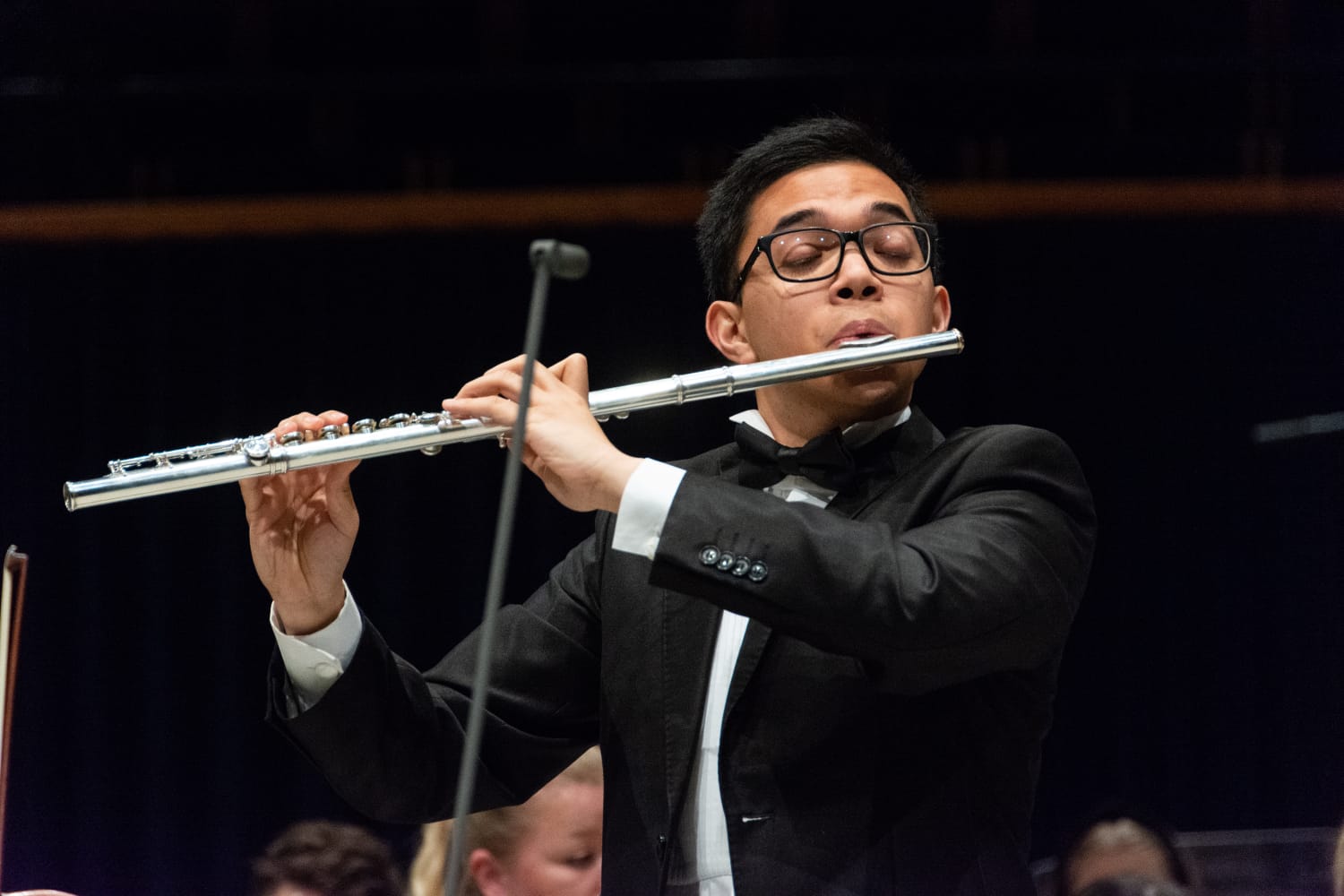
Don’t you know who he is yet? I doubt it! But if you don’t know him already, don’t worry that I tell you. He is Denis Bouriakov, principal flute of the Los Angeles Philharmonic and international soloist.

If you want to learn interesting and useful things about your life as a flutist, musician or person, please read until the end this interview! I hope you like it! 😊

Never compromise something musically to get it more perfect technically… …Yes, I am talking about those people who train to play “l’après-midi” in one breath.

Denis Bouriakov
  • How did you begin in music?

My father developed a love for classical music in his adulthood, but had a hard time understanding it. He thought it would be a good thing for my brother and me to play an instrument or two, so that we would learn to appreciate and understand it. Gradually, we all got very enthusiastic about making music together, with my father fueling it with his crazy ideas, such as learning a new short piece every day on the piano each one and practicing each instrument daily. Then, before we knew it, our apartment was full of music: between my brother and I, we played piano, accordion, flute, saxophone, violin, synthesizer, and even real drum set! My brother’s saxophone teacher had 2 children, who played drums and bass guitar. Together we formed a kids rock band with an invited lead singer. We had a wonderful time performing for a year or so; even toured to Ukraine’s capital, Kyiv, for a concert! This helped us develop a genuine love for making music. Early on it’s way more fun to do that sort of stuff than practicing Czerny etudes on the piano…

– Before working in the USA, you were in Finland and also in Barcelona! How was your experience there?

I had a fabulous time on my first job in Tampere, Finland! I still remember the relief I felt, and the joy of being independent and having a full-time job! I just felt so happy to have the ability to stay in Europe and to be able to play my solo and chamber music concerts and to have a stable orchestra job. My colleagues were absolutely wonderful; I had a bunch of very good friends from the orchestra. The cold winters with lack of daylight weren’t something too depressing for me at the age of 23. I enjoyed the whole culture with the saunas, parties, etc. The schedule was very light, with just one concert per week on Fridays. On top of that, I had a lot of weeks off, which was very convenient, because I could prepare for international competitions and play some solo gigs on the side with no scheduling issues.  But then, a couple years later, I started thinking about auditioning for other jobs and see how far I could get and where life will take me. During my first couple years on the job, I was focused mostly on competitions, and not on auditions for other jobs. But then the priorities gradually switched as I got older. Thinking of it more and more, as my 2008 New Year’s resolution, I decided to audition for every job, which would interest me in 2008. Barcelona was at the end of January, and I got lucky! So I started there in the Fall. It was a big upgrade in many ways! I think just being in that incredible city alone is worth so much! The architecture, the food, the weather… It’s simply amazing, and I still want to come back for vacations there. The job was a bit more complicated though. At that time it wasn’t the happiest relationship between the musicians and the management. I hope things have improved now. I started working there in the middle of October 2008, and the Met audition was in the first week of December. My, back then fiancee, and now wife Erin, convinced me to take the audition. She thought my style of playing and tone would work well in the US. I think it was one of the best decisions in my life to take that audition, which I wouldn’t have done without her support. It was behind the screen throughout, from the first round to the very last, which was very unusual for me. But it also made me feel in some ways liberated, as I could feel a bit more relaxed without eye contact. But then you always wonder what’s going on on the other side, who are all these people whispering and coughing. When I heard I got the job, it was one of the happiest moments, life-changing, without exaggeration. So, after 6 weeks into the Barcelona job, I knew I wasn’t staying there. They wouldn’t allow me to take a year off to go to NY, of course, since I didn’t even play there long enough to even finish my trial. So going to USA was going “all in” for us. If the Met didn’t work out, I would have no other job to return to. But of course, it was worth the risk. As they say in Russia: “Those who don’t risk, don’t get to drink champagne!”

– After being in Europe, you won the principal flute position in the Metropolitan Opera and then in 2015 in Los Angeles, where you are working now. How did you join the Los Angeles Philharmonic?

I joined the LA Phil the same way the majority of the players do – through the audition, in May 2015. I had to start in the screened semi-final round. LA Phil is very strict with this: they want every player to go through at least one blind round, which I think is fair. Playing at the Met was truly wonderful, and I believe playing in an opera orchestra is the best possible orchestral training one can get. You learn to truly listen to others, especially when you cannot see someone you are playing along with, all the way up on the stage. But the Met job is very tough… It’s a huge organization, which makes 7 performances a week happen, of 4 different staged operas. They have 2 principals in each wind section, but it’s still a lot more work than any symphony orchestra in the USA by far. I remember feeling exhausted towards the end of the season every year. The seasons go non-stop; there aren’t Christmas breaks or anything. So, after a few years, I was naturally interested in the LA Phil job when it opened up. The conditions are some of the best in the world, and you get to play in the beautiful Disney Hall! It’s stunning, both outside and inside, and always a pleasant shock for a firstcomer to see. Working with Gustavo Dudamel is special for me too. He is absolutely incredible and was one of the biggest factors for me in my decision to move to LA.

– Are there differences between Europe and America in the orchestral world?

Well, it’s a bit hard to generalize, since every orchestra is unique in its way, both in Europe and in the USA. But there are certain things which are different in general, I think. In short, USA orchestral playing is more about blending and being perfect, and then being soloistic when you have to be. European playing is more about being a soloist who can also blend and play in the orchestra. It’s a different priority in playing. I think it starts with training at school. In Europe it’s more about studying the solo repertoire and then attending the school orchestra sometimes. In USA conservatories, in general, the orchestra is the priority, and mock auditions and orchestral excerpts are studied since early age. It’s all preparing you for an orchestral audition eventually. Which, of course, is very practical if you want to win a job. I try to take good things from both approaches in my teaching. I am personally not a fan of playing when it’s all about blending. I think some US orchestras go too far with this approach and they start to lose their identity and personality, and sound sort of the same. I am not talking about the top US orchestras, of course, but of the second tier and below. I think what makes a great orchestra truly great, is the combination of those unique personalities of the players, and their musicianships. When you hear the Berlin Phil, you hear a group of top soloists in the world making music together as a group. They don’t always necessarily have the same ideas about phrasing, and even style sometimes, but that’s what makes it so interesting and wonderful to hear. So I think one has to be able to blend well as a member of the section, and also lead and be the big soloist and bring something personal in, when it’s the right moment in the piece. I am very fortunate to be a part of an incredible woodwind section in LA. We have only one more spot to fill in now – the principal oboe. It is a very special position for me, naturally, and I hope we find the right person once things get back to normal. 

– You won prizes in the Munich ARD, Jean-Pierre Rampal, the Prague Spring, the Carl Nielsen, and the Kobe competitions, among others. Which is your secret to win those prizes?

Haha, well, there is no big secret! I think the main thing is just to keep trying. A lot of students think they are not good enough to participate in a big competition. Or it’s too much work and they can’t handle it. Or too stressful, or they don’t have any connections with any jury members, etc. Many different reasons. And they are waiting for the right moment to try a big competition someday. The truth is, there is almost never the right moment for anything, whether it’s a competition or an orchestral audition. So the main thing for us is to try everything we can! I heard so many stories in Russia saying that all international competitions are rigged, and you can never succeed unless you have a strong connection with some jury members. While it may help some people, I must say I knew no one from the juries when I started competing. And it didn’t matter too much. I think in general most of the jury members have integrity as musicians and vote honestly, and between 12 judges it’s objective enough. Of course, there are some “politicians” always, who will vote in a calculated manner to create an advantage for their students. But one vote is one vote. You might get a prize lower as a result at most, but that’s not a big deal in the end. So my advice is just to keep trying; nothing beats that. 

– What do you think that makes you a special flutist? 

Well, we are all special in our own way. I think what makes one special is having a personality and the ability to show it through making music. It’s the ability to tell the story, not just play the notes. If you succeed in that, people will want to come back to your concerts and hear you again. When there is something real, everyone recognizes it even without musical training. I think we all have things we hear and feel, and cannot explain or describe in words. 

– What has made you get where you are?

I was very lucky in my life to be surrounded by amazing people who supported me since I was little.  My father was beyond supportive; he gave up many things and jobs for my flute, and was very brave to take drastic action. Such as move 1,200 km north from our home town in Crimea to Moscow, to study flute his 9-year-old son. Not every parent can do that for their child. We had to be separated from my mom and brother for 2 years; they stayed in Crimea and moved to Moscow a couple of years later. My father was a “tiger dad”; would sit in every lesson and take notes. Then he would remind me of those things when I practiced. I was also lucky to meet the right teachers at the right time in my life. All it took was two teachers – Yuri Dolzhikov in Moscow and William Bennett in London. Both gave me exactly what I needed at the time. Dolzhikov helped me to build a strong technical base for the rest of my life, and Wibb was just everything in one teacher you could ever want – an amazing intelligent musician, who also gave me a deeper understanding of some technical aspects of playing as well. Of course, I had to work hard and tried not to miss opportunities when they come up. Luck is an important thing in life too, and not to be underestimated. But one can only win a lottery if they bought a lottery ticket, so you can only get lucky if you keep trying. In a way, you have to attract your luck, not wait for something good to happen to you out of nowhere. 

– What can you recommend to the professional flutists who want to win an audition? Or a competition?

Well, I’ll start with orchestral auditions. When you audition for an orchestral position, only a couple of people judging you will be flute players. This is very important to realize. The other judges all play different instruments, and will not be impressed by pure instrumental flutistic “difficult” things. They will be most impressed by your musicianship and personality, not by how fast you can move your fingers and double tongue, or your ability to circular breathe or play loudly in the low register. I have been on juries of different instruments auditions, and it is always the player who has the most to say musically who gets the job, not the one who didn’t make any mistakes. So, while it is important to practice your “Classical Symphony” passages, make sure you spend a lot of time understanding the character of each piece and play through the entire piece along with recordings, not just study your solos. You can always hear if the person playing was just practicing their solos, or if they know the piece and the context. Find out who you are playing with, think what sort of colors are appropriate for this piece and period, etc. Never compromise something musically to get it more perfect technically. For example, if you want to play something in one breath, but it makes you sound less expressive and less interesting, that’s not a worthy sacrifice, ever! Yes, I am talking about those people who train to play “l’après-midi” in one breath. I was one of them, as especially in Europe many teachers insist that it must be played in one breath. I was practicing it that way, but could never make it sound as good in one breath as with taking a breath either in the middle or towards the end. One time I played it for Andreas Blau and asked him what he thought of this. He thought of it for a few moments, and then answered: “Well, we had an audition for principal flute in Berlin Phil some years ago. Many great flute players came, and many of them played it one breath. But then, one person played it, taking two breaths, and he got the job! That was Emmanuel Pahud”.

Another thing, which sounds very obvious, is that you have to put enough practice hours in your preparation. It took me many auditions as a student to realize just HOW MUCH preparation is needed to perform your best. The difficult thing about auditions is that you have to stand out of the crowd in just a few minutes of playing excerpts alone. Often it’s only 5-10 minutes they hear in the first round. So every little thing you do matters, because you don’t have a full recital to show what you are worth as a musician. When I tried my first audition as a student, I practiced for a week or so, until I felt ready. At the time I would be learning a lot of solo repertoire, and this felt so much easier – just a bunch of short excerpts! Then I went to audition, and all sorts of things would come out during my performance that I didn’t expect. I remember one time being completely thrown off by seeing a lot of people in the hall during my audition for a German orchestra. They took off the screen for the second round, and I saw half the orchestra sitting there. Suddenly, I was so nervous! I remember playing the Carmen solo and hearing my heartbeat in my ears, like a (very loud) drum! Couldn’t focus or do anything…completely lost control! I would always prepare for international competitions for a couple of months or so, with lots of hours of practice, but it felt strange to do that for a bunch of little orchestral solos. But then, when I auditioned for Barcelona, I finally tried it – practiced 4 hours a day for a month, polishing every tiny detail, even when I already felt long ago I was ready to perform. Something very different happened when I played my audition there. I was still nervous, of course, but finally felt in control! It was the kind of nervousness I usually feel in concerts, the one which makes you perform better and feel excited. So ever since I practiced much longer for all auditions, and it allowed me to keep things under control under extreme stress one goes through taking an audition. 

For a competition – it’s in many ways similar. You also have to do all of the above. While all the judges are flute players in this case, they all have different opinions on many things – tone, style, etc. So one of the most important things here is to be convincing in your performance. Think of it as a listener and/or a judge: even if you hear someone play completely different from the way you would, if they make it sound convincing, you would still enjoy and appreciate it. So don’t be afraid to be yourself and don’t try to second-guess what the jury members like, but try to convince them with your interpretation, tell them how it should go. If you are not sincere in your music-making, they will feel it too. When you perform, you project everything you feel at that moment to the listener, whether you want to or not. So if you don’t feel convinced yourself, you will never convince the listener. If you don’t feel moved, the listener will not feel moved either…

– You play with a silver flute. What do you think about gold flutes?

I think it’s a matter of personal preference, and one is not better or worse than another, just different. I have tried golden flutes a few times and even considered switching. But I found my true voice on silver, and it seems to work better for me. What I like about silver is how easy it is to change colors. I cannot get the same range of colors on gold instruments. I find it especially difficult to produce a very hollow color on gold, which is so easy on silver. But gold has some interesting roundness and brilliance in the tone, which I like. That was the reason I considered switching. Also, I think it’s a bit easier to sound good when you are not in your top condition. Silver is more sensitive to you being in shape. So, while silver takes a bit more effort, for me it’s worth it for the wider color range I can get out of it. 

– How do you see the current musical outlook?

This is a difficult time for classical music, no doubt. Already fragile financially as an industry, to be hit by this pandemic is very hard for many musicians worldwide. But, I am optimistic about the future nevertheless. I am sure when this is all over and life is back to normal, people will want to go to concerts more than ever before, “hungry” after a year of not attending concerts. I think one could find parallels with wars ending. Whenever a war comes to an end, people feel so happy to be back to normal, and appreciate everything much more, including the arts. So I think soon we will see an increase, not a decrease, in numbers of people attending concerts and playing instruments. 

– And finally, some advice for our readers.

I feel always funny to be giving an “advice”, as I don’t like the concept of “Masters” and “Gurus” in general too much. Many “Masters” start taking themselves way too seriously from my experience and sometimes make me feel sick with their feeling of self-importance. I don’t ever want to get to that point personally. But I like sharing things that I would find helpful for myself earlier on though. These would be: 

Don’t feel too upset when failing at something, whether it’s an audition, a competition, or anything else, as it is an inevitable part of being a musician! Not one player in history won everything, so don’t beat yourself up. And here we get to the next part:

Keep trying!! Don’t get discouraged by not winning. As Wibb told me once, after one particularly upsetting audition: “it’s OK to be upset for a day, but forget it and move on tomorrow!”
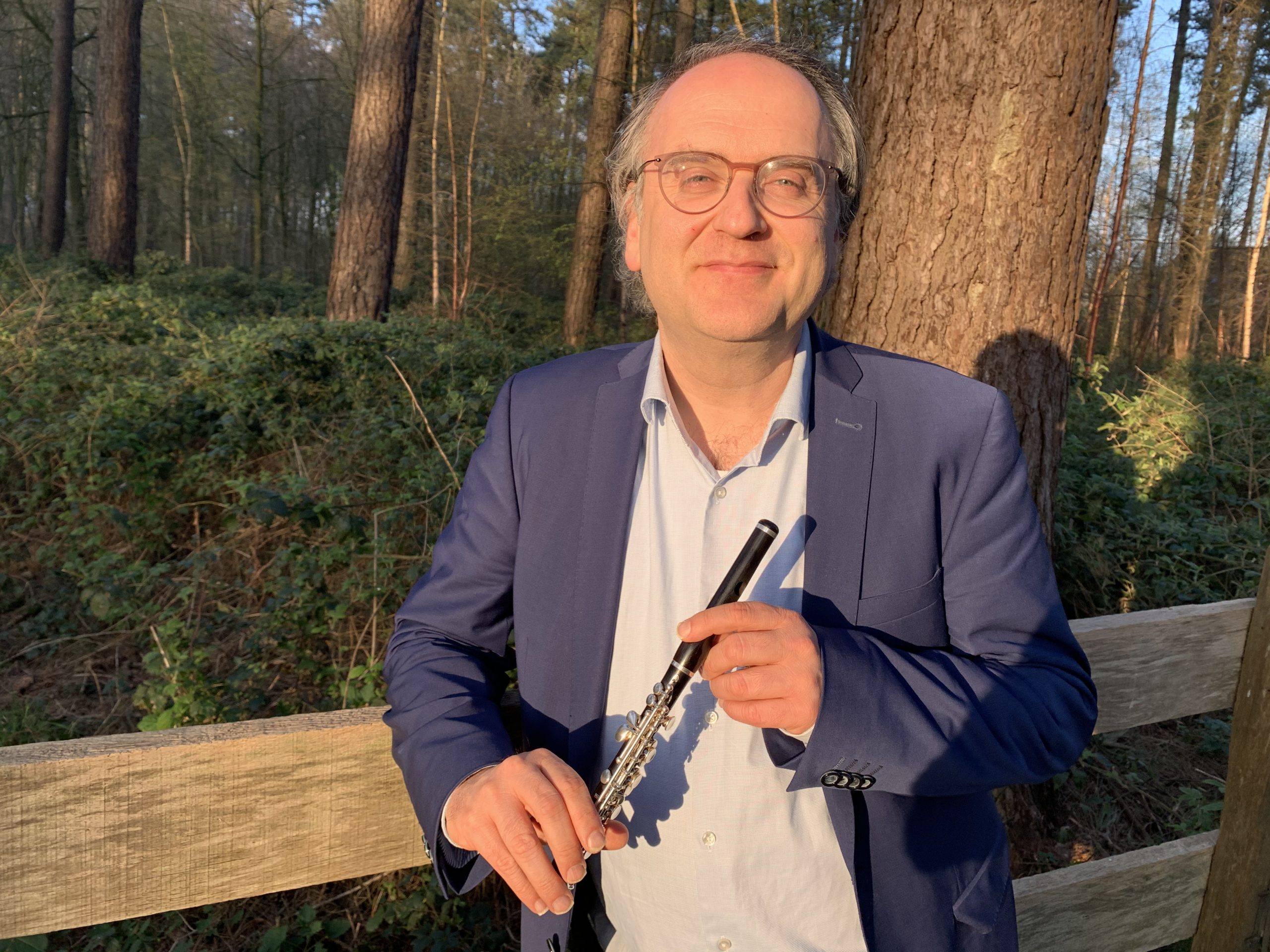
Interview to Peter Verhoyen

0

I’m back with a new interview on the blog. Today to Peter Verhoyen, piccolist of the Antwerp Symphony Orchestra and piccolo teacher of the Antwerp Royal Conservatory in Belgium

A great opportunity to meet an exceptional piccolist who is reaching that more and more people are addicted to this marvelous instrument.

I remind you that you can find some interviews to piccolists, as I made to Gudrun Hinze (Gewandhausorchester) or Jürgen Franz (NDR Elbphilharmonie).

I hope you like it! 😊

  • How did you begin in music?

My interest in music started when I visited a concert with our local wind band. I was very impressed with the warm sound coming out of a group of more than 50 amateur players. My father suggested I should start with clarinet lessons but I definitely chose the flute! At first, I didn’t seem to have much talent for the flute. It took me months practicing on the flute headjoint before I could bring out a beautiful sound. But once this step was taken, I very much enjoyed practicing the etudes, scales and new pieces I could discover thanks to my teacher. I think it’s a vital aspect of music to be able to play together in ensembles or orchestra from young age. It’s fun to play music at home, but it makes so much more sense if you can perform for an audience, and doing this in good company is one of the best possible experiences in life. Only a couple of years ago, I recorded a cd with the wind band of my village, playing the Chaminade and some virtuose piccolo pieces. It felt so good going back to where it all started!

  • Why did you decide to specialize in piccolo?

As it is the case with many piccolo players, I was one of the few players in the band ready to take the risk playing this very audible, and at start agressive, sounding little bird. 

I soon found out that I really enjoyed it, and that I could help many orchestras out playing little piccolo solo’s as a freelance musician. After my audition for the Antwerp Symphony Orchestra, I decided to start a project recording recital pieces with an excellent pianist, Stefan De Schepper, who played a very important role in the development of my piccolo carreer. 

  • Do you think that piccolo should be studied from the first years of the flute studies? Why?

There are some very succesful stories with musicians starting with the piccolo right away. I’m not convinced this is the best way to go because every piccolo player will have to play the flute from time to time. On the other hand, I think it would be nice if talented flute players start learning the piccolo after a couple of  years of intensive flute study. The problem is that many student´s piccolos are of very low quality. Also, if your teacher is not a piccolo player, he might not be the best person to help you finding a good instrument and giving useful instructions. 

  • What’s the most curious thing that has happened to you in your career as a musician?  

The life of a professional musician is full of adventures and surprises, so I would not know where to start. I think my addiction to recording cd’s is quite curious. I believe making recordings is a very constructive process where you can boost your level as an instrumental musician enormously. I spent so many hours in a recording studio and listening to the result of the sessions I almost got crazy. But after all I’m very happy I could present so many piccolo recordings to all those looking for being inspired by new repertoire. Also, I could help some composers finding their way to a broader audience. Furthermore, I was very lucky to meet inspiring artists that helped me to develop my career. I learned so much from Antwerp Symphony Orchestra conductors: Philippe Herreweghe, Jaap Van Zweden and Edo de Waart. I’m very excited about our new chief conductor, Elim Chan, who is bringing such a fantastic positive vibe to the orchestra. Working together with the brilliant colleagues of my flute section (Aldo Baerten, Edith Van Dyck and Charlène Deschamps) is very inspiring, too!

  • What can you recommend to the professional flutists/piccolists who want to win an audition?

There are different aspects. First you have to work hard and make sure you are brilliant in all aspects of both the flute and piccolo technique. Second, you should know what job you are applying for, so listen to the orchestras that are organizing the audition, and focus on their specific traditions on colour and style. Work in detail, but don’t forget that, on the day of the audition, the positive energy you are showing might be more convincing than a spotless performance. On the other hand, you have to realize that without perfect control of tempo, rythm, intonation and projection of the sound, it’s going to be difficult to survive the first rounds of an orchestral audition. 

  • Do you think that the orchestra or teaching are the only career opportunities for flutists?

I spend a great part of my career performing chamber music in different combinations: flute and string trio. I think it’s very good to have a personal project you can go back to if working for the big institutions (schools, orchestras) that engaged you is not as fulfilling as you might wish. Some of my students had wonderful orchestra and teaching projects but chose for other jobs in the cultural sector, or started working on other pedagogy projects (editing methods, online projects). I think it’s very important to keep an open window to a society that is quickly changing. 

  • How do you see the current musical outlook?

Of course the corona crisis is a challenging time for the professional music scene. More than ever it’s very important for classical musicians to rethink their professional choices. But this challenge could have also a positive effect. I really feel our audiences have missed our live performances enormously. We spent a lot of energy bringing livestream concerts and recordings to the quarantined people and we did get a lot of sympathy and appreciation in return. I regret to see that last years too much attention is going to perfection in technique, and perhaps not enough to inspiration, colour and emotion when it comes to music making. When I listen to flute competition finals, I’m often very impressed with the level of playing but somehow dissapointed to notice that all those brilliant young fluteplayers start sounding the same. I hope that we can preserver some traditions from the national flute schools on the one hand, and find new ways to move our audiences on the other hand. 

  • And now some questions from our readers. Maite Broch asks: Which methods for piccolo would you recommend to improve?

It depends on your level. For advanced students, the ‘Mazzanti Method’ is somehow the bible. I also found the publication by Jean-Louis Beaumadier ‘Exercices pour la flûte piccolo’ interesting. I also think it is a good concept to adapt your flute practice routines to your piccolo practice. A lot of scales, sound exercises (especially vocalises and transposed melodies) can be very beneficial for your flute level!  I hope to publish a practice book for piccolo players at the end of this year!

  • Emilio Oltra asks: Which piccolo do you use and why?

I think the quality of piccolos has improved a lot last years, even more than the quality of the flutes. My first piccolo is a Braun piccolo, which I bought more than 15 years ago. I also bought a model which can play low c, which I use for the recording of arrangements of flute, violin or oboe pieces. I also try other instruments which bring new colours to my piccolo playing, but for the more difficult orchestra parts, I feel more comfortable returning to my first choice. I very often play a Seaman Storm piccolo, which is perfect for open air concerts. 

  • @evaquilis_04 asks: Why the piccolo?

I think the first question should be: ‘why not the piccolo’? First, you have to go against the negative reputation of the instrument: being loud, shrill, out of tune and nasty. I enjoy playing the piccolo so much because I believe it has way more to offer, and there are plenty of unexplored paths. I have been working very hard to develop a more singing sound on the instrument and now we can see if the piccolo also can convince an audience bringing musically challenging repertoire. Unfortunately the repertoire is very limited, but making transcriptions and encouraging composers to write for the instrument is a fun and rewarding process. 

I think that as a musician you have to choose for an instrument that matches your character. I’m by nature a quite nervous person, and that helps me enjoy playing the sometimes very tricky, quick and open piccolo solos in the orchestral repertoire. 

  • @patri_music asks: Which piccolo do you recommend to buy? A quality piccolo for all my life.

As I already mentioned, I believe the quality of the piccolos that are being made today has improved drastically. The scale is much better, and piccolo builders found very good solutions for the headjoints. I would recommend you to visit a flute shop that has a wide choice of instrument.  My strongest recommendation is to ask a professional piccolo player to help you choose an instrument that suits you well. Without naming the exact makers, there are some brilliant piccolo builders in Germany, France, the United States and Italy. Consider the differences between piccolos with a wave style headjoint and the traditional style. Both have their positive aspects and difficulties.  Pay attention to the ability to bring out the top notes. Some piccolos have a wonderful middle register, but if you can’t play high b and c, you certainly do have a problem. The quality of the wood plays a very important role in the sound of the piccolo. 

  • And finally, some advice for our readers.

I hope you all can enjoy the wonderful world that is developing for lovers of the piccolo lately. There’s some fun projects going around that are easy to follow on the internet. I think we all should support the young talented piccolo players expanding the repertoire and playing it at the highest possible level! 

Interview to Loïc Schneider

0

I remember perfectly the first time I heard the Concierto Pastoral for flute by Rodrigo. Is not a concert that the flutists usually play, due to his difficulty.

I was amazed when I listened the video for the first time. I didn’t know the flutist who played. Later I discovered that was Loïc Shneider, french flutist and current principal flute of the Orchestre de la Suisse Romande in Geneve (Switzerland) with Sarah Rumer.

Today you have the opportunity to know this great flutist, who has won several competitions (ARD, Rampal, Nicolet, Kobe…)

Very rewarding words from Loïc. I hope you like it! 🙂

  • How did you begin in music?

My mother was a music teacher in the school, so we always had music, classical or not, at home. She was playing the violin but I must confess that I don’t really remember times where she played it. I had some opening music lessons for little children from the age of 5. You know, when you play with a lot of percussion instruments and you learn a little bit to sing. 

When I was 6, I heard flute for the first time in my life in a school camp, played by a teacher just before we had to go to bed. And as soon as I came back, I said to my parents that I wanted to start playing this instrument.

They agreed, of course, but unfortunately I was to small and there weren’t curved flutes as we have now for beginners. So a few months after, when I finally had to go to my first flute lesson, my mother gave me the box with my instrument. I opened it and … it was a recorder!!! I tried to explain to my parents that it was a misunderstanding and that it wasn’t the right instrument, but they said I was to little for the one I wanted.

I was so upset that I didn’t go to this first lesson! 

After 2 years with the recorder, I finally started to play the flute!

  • You won several prizes in the Munich ARD, Jean-Pierre Rampal, Nicolet, and the Kobe competitions, among others. Do you have a secret for winning competitions?

The BIG secret has two parts : practice and fun! 

Most of the students I meet don’t exactly know how to build their practice. I had the chance to get a job in the orchestra quite early (I was 22) and it implied two things:

First, in the orchestra you have to work fast and efficiently. Concerts come every week with different programs, no time for wondering if you should do it one way or another.

Then, since I was already working in the orchestra during all my competitions period, I had to organize myself with not so much time for my practice. And even if it seems to be harder to prepare yourself correctly when you only have two hours a day to play, in fact, it’s quite the opposite: you have to be smart in order to be more efficient!

The second half of the secret is fun : I applied for all those competitions because I hadn’t so much opportunities to play in concerts at this time. I was so happy to be given the chance to play the beautiful pieces you can find in the competitions’s repertoire! 

If I play music, it is to enjoy the beauty of it and to share it with whoever wants to listen to it: family, audience or jury. So in my practice, it was always my highest motivation!

  • What do you think that makes you a special flutist? 

I think that from the moment you decide to think by yourself and to play the way you really want, without trying to please any teacher of some sort, you are a special flutist.

From this point, everyone is special in his or her way. 

  • What has made you to be where you are?

My  family: I achieved what I did thanks to the support of my wife and the immeasurable joy to have the boys.

And also my will and, I hope, my humility. Even if it’s not very humble to dare to say so …

  • What’s the most curious thing that has happened to you in your career as a musician? 

There are always strange things happening when you are on stage, but this one is not about that. After the ARD competition, I received a phone call from an american woman saying she was manager in the Pittsburg Symphony Orchestra. She said they had a job as 1st flute in their orchestra and that their conductor, Manfred Honneck, heard my performance on the German TV and wanted to propose me a trial of 2 or 3 weeks there.

And I thought it was a joke, and that a friend of mine was just playing me, so I answered that it was not fair to make fun of me. The woman was really surprised by my answer and she swore it was for real. Since I still didn’t believe her, she said that she would write an email.

It is what she did, and all of it was true: I called my friend in the interval and she confirmed to me that there was a job in Pittsburg and that it was the american way of doing a trial! 

Finally, I didn’t go. I couldn’t imagine to live there with my family, so I passed on the trial.

  • What can you recommend to the professional flutists who want to win an audition? And a competition?

To practice harder! No, seriously, to practice their music with their brains and their heart. From on way, to always try to understand what the jury would like to receive, which is something that doesn’t only apply for music: I think your life will always be better if you try to understand what the people in front of you really need.

And from the other way, with your heart, always practice in this idea that you want also to give from yourself: music is sharing, and sometimes can be almost indecent because you reveal some personal things; but it’s exactly where it starts to be interesting!

  • Do you think that the orchestra or teaching are the only career opportunities for flutists?

Those are the most usual careers, but fortunately not the only ones. We have now this idea of comfort; that’s why we try ( I am totally part of this, I know) desperately to get a stable job in orchestra or as teacher.

But during centuries, being an artist wasn’t so much fun. It was in a certain way a rough life to live. You had to sacrifice a lot to live your artist life. 

We are not so adventurous now, so we don’t really explore the possibilities our art could give us, in terms of alternative concerts or projects.

But this is clearly a different life, and I have to confess that I like mine: playing great composers at the orchestra and trying to give back to the students what I received!

  • How do you see the current musical outlook?

Precisely now, with this COVID crisis, I think we really have a great opportunity to redefine ourselves and to make the people, all the people, aware that art and music may not help to feed themselves, but that our humanity really depends on it.

Art may not save the planet, but it could save our mankind; it defines us as human beings and not only as animals.

So, yeah, those are challenging times but exciting, and it should open to many changes!

  • I have some questions from the readers:
  • @Toquica.flute asks: What do you recommend to work on a piece more effectively? How to approach, etc…

As I said before, work with your brain: analyze the score, the period, the structure, the difficulties… Try to create your exercises based on the piece’s issues, do not always practice the same exercises for every kind of repertoire. Imagine them as tools: you always can create new tools! 

After that, your job is to use those tools in the right way. That’s where an external ear, the teacher one for example, is useful.

But even in this «practice» part, never forget why you play music: to star and communicate. Always imagine the concert hall, the audience. Play for the others, not for yourself.

  • @evaquilis_04 asks: How did you get there?

To be honest, I couldn’t really say. I never dreamt of having achieve what I have done. I couldn’t imagine having all what I have now, for the music, of course, but also in my life in a general way.

And that’s clearly the most important: the balance in my life, between my music, my family, my friends. I am really so lucky to have it all! But if I had to define it, it would be those 4 words (the order is not important) : will, practice, fun and luck. 

  • And finally, some advice for our readers.

Having the opportunity to live you life doing your passion is absolutely marvelous: do whatever you can to reach this goal!


Interview to Matvey Demin

0

Welcome to a new interview! Today I bring you a new young flutist who has already succeed on big competitions and who is already working in one of the most prestigious orchestras in Europe.

He is the russian Matvey Demin, coprincipal solo flutist in the Tonhalle Orchester in Zurich (Switzerland) and first prize winner in the Tchaikovsky Competition on the woodwind category in 2019.

He has won also other prizes and plays as a soloist with different orchestras, it’s a good thing he was born in 1993!

A top flutist who I recommend you to listen, and of course, read this interview where he tells very interesting things. I hope you like it!

  • How did you begin in music?

I come from a musical family. For instance, my mother teaches piano in a music school, my father is not a musician but loves music very much, and my grandmother used to teach all wind instruments in the same music school as my mother. You’ll think it’s impossible to teach every wind instrument (flute, oboe, clarinet, saxophone, trumpet, trombone etc.), but in a small town in Siberia, in Russia, it was possible. For the town where I come from, it was a usual thing. So, naturally I became a student of my grandmother when I was 9 years old. The music school got a new flute from Japan (it was Yamaha 211) – and my grandmother gave it to me to try. And I loved it ever since.

  • What’s the most curious thing that has happened to you in your career as a musician?

For me its a couple of things: first would be moving from Siberia to Germany alone when I was 16 years old to study with Prof. Andrea Lieberknecht; and then the most bright moment of course is winning the Tchaikovsky competition. 

  • You were the first woodwind winner of the Tchaikovsky Competition. First of all, congrats! What does that mean for you?

Thank you very much, dear Juan! As a young musician I had followed every edition of Tchaikovsky competition. And I always thought to myself – I wish I would be a pianist or violinist or a cellist, just to take part in this competition. So when I saw the opening of a woodwind section I was really excited to take chance to be a part of this competition. Being the first prize winner of this category was truly a dream come true. 

  • Now you are working in Zürich. How did you join the Tonhalle Orchestra?

I think it was my 3rd professional audition. It is a very complicated process sometimes.. You have to have some sort of experience (youth orchestras can help a lot) to get admitted to the audition in Europe. I came to Zurich on the night of audition from Russia, and I remember that I was very tired and jet-lagged. It was 4 rounds overall, where the first round was held behind a curtain. On that day I have only thought about how to give my best, which you should do in every audition. And in the end, I got the position, which I’m very happy to have.

  • You know that is really difficult to get a job in an orchestra. What can you recommend to all the flutists that are trying to get a job?

It is indeed difficult. But my advise would be – start to play auditions as early as you can. Prepare them well from beginning to the end. Maybe the best option would be to gain experience in youth orchestras or orchestra academies first. And then comes a very important part, which is to stay consistent and not to get disappointed if it doesn’t work out the first time.

  • Do you think that the orchestra or teaching are the only career opportunities for flutists?

Yes and no. In our time it is very difficult to be an international wind soloist. Even being a renowned wind soloist means that you have to have a stable job (whether it’s teaching or playing in an orchestra). But in my opinion there are still few other options – you can play chamber music (for example in a wind quintet). 

  • How do you see the current musical outlook?

All of us musicians are struggling right now because of the pandemic. Concert cancellations even for months ahead are, unfortunately, a usual thing… But there is still hope for the best as we’ve seen – some orchestras (mine as well) already started to play concerts for smaller amount of audience. That gave me the felling that at some point we are going back to normal. For me, the whole lockdown situation was a chance to have a bit of a break and gather new strength, ideas and repertoire for the future. 

  • I have a question from a reader. @patri_music asks: Which flute teachers or music universities do you recommend in Europe?

I have done all my studies only with Prof. Andrea Lieberknecht. She is a fantastic teacher and player. Also the conservatory in Munich, where she teaches, is an excellent university. And of course in Europe there are many great teachers (all with different approach and taste) almost in every country. Most importantly I would advise is the following – you can try to take part in master-class with the teacher you like, and then see for yourself if that works for you.

  • And finally, some advice for our readers.

Listen to a lot of music of all kinds (symphonic, flute music and chamber music… maybe even something totally different) to build a musical taste of your own. And of course, practice well, because the old saying «practice makes perfect» is true. Also, for everyone, stay hopeful and positive. Only like this we can overcome the current crisis and make beautiful music all together again!

Interview to Wally Hase

0

“I really enjoy listening to a flutist who I imagine the instrument being their inner voice.”

Today I bring you a new interview to an exceptional flutist. She studied, among others, with Auréle Nicolet. She was principal flute at the Staatskapelle Weimar (Germany) and later a professor at the Hochschule für Musik „Franz Liszt“ in Weimar.

Currently, Wally Hase is a professor at the „Universität für Musik und Darstellende Kunst Wien“ in Vienna (Austria).

A pleasure to interview Wally and read all her experiences. Remember that at the end of this interview, she will answer the questions you asked her on my Facebook page and on my Instagram!

I hope you like the interview to Wally Hase! 🙂

  • How did you begin in music?

I grew up in a family where music was omnipresent. My father was a bassoonist and my mother has always loved music. My siblings are musicians, too; for the past few years one of my sisters has lived  in Los Angeles and works as a director and producer. I am the youngest of 4 children and everybody seemed to always practice an instrument in our house. At the age of 9 I wanted to do the same. As luck would have it, I got a flute into my hands; a colleague of my father suspected that the flute might be the right choice for me. And in hindsight I have to say, he was absolutely right and I fell in love with this instrument immediately. Until now, it is particularly the sound and being able to mold and create this sound myself, that I feel honoured to be able to do every day. 

  • You were teaching in Weimar. How was your experience there? Also you are since 2018 flute teacher in the University of Music and Performing Arts in Vienna. Are you happy to be there? What is your evaluation of the first years?

Weimar was a huge step in my life. Even before completing my studies, at the age of 22, I was appointed principal flute in the Staatskapelle Weimar in Germany, a position I held until 2009. In 2000, I was appointed professor of flute at the University of Music Franz Liszt Weimar as well as guest professor for flute at the University of Music Krakow, Poland (2014-2018).

I am deeply grateful about these intensive years filled with many experiences and fantastic colleagues. In Weimar, I had a maximum of 6 students, which is probably one of the biggest differences to Vienna, where I have 14 students at the moment. The University in Weimar is a comparatively small institution where everybody knows each other. When I was appointed professor of flute at the University of Music and Performing Arts in Vienna,I realized very quickly that being part of one of the oldest and most prestigious educational establishments for classical music worldwide was a different situation, and therefore pretty overwhelming at first, to say the least.

It is, however, a huge privilege to teach there, and includes fantastic posibilities to realize projects for my students. It felt easy to get adjusted to my new surroundings and colleagues, and collaboration with other instruments and departments rounds up a constant flow of projects, concerts and lectures. The range of opportunities that the University offers is great and diverse. In addition, Vienna is one of those places that still have an air of a constant flow of cultural activities right at your doorstep. Going out to the theatre, concerts or museums is what everyone seems to be doing here every single night of the week; not to mention that its size allows you to walk or get to any chosen cultural activity by public transport easily and often in a matter of minutes! Vienna is a beautiful and inspiring city in any case! As I was just beginning to fully enjoy this lifestyle and establishing more connections with chamber music colleagues in and around the University, I miss rehearsing and playing concerts even moredue to the Corona Pandemic.

  • What can you recommend to the flutists who want to learn with you?

First of all „I am looking forward to meeting you anywhere – almost, anytime.“
Please do not be afraid of making mistakes – everybody is in a constant process of learning their whole life. You will gain experience and proficiency with a positive attitude.

  • What do you look for in a new student in your class?

I am always looking for authenticity and determination in students, but I am also looking for real musicians. The latter might sound like a very obvious requirement, but students seem to get caught up in I technical competition sometimes and loose the bigger picture. I am looking for flutists who tell stories and share emotion through their instrument. I really enjoy listening to a flutist who I imagine the instrument being their inner voice.

  • How do you see the current musical outlook?

I want to stay positive, because at the moment, in the time of Corona, so many people are filled with doubt and fear. Many of my friends and colleagues are freelancing and I’m very impressed at how creative and brave they are. They are forced to create a new sense of being that includes their love for music and their instrument in a much more abstract way than most of them have ever dreamed of.

On the other hand, we have to get used to the idea that the situation for us musicians won’t be easy, even after Corona. Everyone is different; that makes our life as musicians and teachers so very interesting and exciting.

  • And here you have some of the social media questions:

Paulo José Loggio: How important is for you the body when you study and when you play in a concert?

Very important. My own practice is designed to strengthen and focus on the imagination of playing in a „big hall“. I use all my possibilities of sound production, from a tender pp up to a strong and bright ff.

In order to do so, we need to focus foremost on a stable posture: I stand upright, my eyes are looking towards „the balcony in my imaginary theatre”, I have a strong back, my shoulders and arms are relaxed, my chest and throat  are open – so I can breath very profoundly and noiselessly and I can use my body resonance.

Before I play, I imagine the most beautiful note possible without actually playing it. Then, in a relaxed and open way, I breathe in deeply and play the most beautiful forte or piano… or whatever colour and character I want to play. The imagination of sound should be reflected in the breathing already.

Aída Escudero: How is your daily routine? Which methodes do you recommend/work?
@Araucarialuna: Which is your favourite book to practice the sound?

I have to admit that I don’t really like a strict daily routine very much. Every day I am looking for a interesting and different way to practice. I change my exercises often and try to make up new ones for particular pieces every day. I think sigh reading is a fantastic way to warm up. I use a lot of Moyse, Taffanel-Gaubert, Reichert, different studies (Paganini, Andersen, Donjon etc.)

I do believe that we don’t need to look for written down exercises all the time. Coming up with tunes that you remember having played in the past and transforming and adjusting them to different emotions can be an excellent way to expand your ability to create a variety of different sounds.

Every day I search for colours, sounds and other physical means of expression that might help carry my thoughts and musical ideas and turn them into a kind of message that speaks to an imaginary audience.

  • And finally, some advise for our readers.

Everybody ought to try to find ways to find joy in their own decisions. I wish for all young musicians to finish their studies with a certain know-how that will allow them to be free spirited, inspiring and generally well-prepared musicians and human beings, for the ups and downs that they will encounter in their careers.


¡Suscríbete para recibir todas las novedades!

¡Recibirás el eBook gratuito “61 Consejos de Flautistas Top”!

Interview to Sarah Rumer

1

Today I bring you again an interview. After interviewing Frederic Sánchez, from Azahar Ensemble, I bring you today a flutist that plays in an orchestra, and what an orchestra!

She is Sarah Rumer, solo flutist of the Orchestre de la Suisse Romande in Genève (Switzerland). A first class flutist who also teaches in the Music University Lucerne, also in Switzerland.

Maybe you didn’t know Sarah (or yes), but believe me, this interview is a magnificent opportunity to know her: she is a top flutist and she tell us a lot of really interesting things. I hope you enjoy the interview!

And remember that you can follow me on Facebook or Instagram to be updated, and you can also support this blog on Patreon. Thank you so much!

Copyright : Studioregard.ch www.fb.com/studioregardch
  • How did you begin in music? 

I grew up in Zurich in a family where music was omnipresent. My parents, both medical doctors, were (and are!) both enthusiastic amateur musicians; my mother used to sing in choirs when I was a child and my father played at home the piano and, in the church of our town, the organ. We sang a lot, and normally when I was going to bed it was my father’s practicing hour, so I listened almost every evening to his playing of Bach and Beethoven’s piano works, or Schubert’s “Lieder” while falling asleep. When I was five or six years old, I used to accompany my father on sunday mornings when he was replacing the ordinary organist for the mass, and turned the pages of his scores. That’s how I learned reading music: he told me to follow the bass line, which was the easiest one, and gradually I understood how music was written. Not a very academic way of solfege education…

After some years of polyvalent musical education with piano, recorder and singing, I hesitated between flute and cello, but flute was very much „in vogue“ as there was an excellent flute teacher in our district. And I remembered my chats with a very old lady in our neighborhood, who had talked to me about her son being a flutist and had shown me some of his records, which had impressed me very much. That’s how I started playing the flute, and later I realized how famous the son of my neighbour was: it was a certain Peter-Lukas Graf…

My main teachers were Felix Dorigo, to whom I owe the pleasure of music making and all the basics of flute playing and phrasing, Günter Rumpel, former Principal of the Tonhalle Zurich, who taught me preciseness and conscientiousness, and Dieter Flury, Principal of the Vienna Philharmonic, who taught me reading the music behind the text. 

  • What’s the most curious thing that has happened to you in your career as musician?

There are plenty of funny memories! Bumping into somebody you haven’t met for years somewhere on tour, or these moments in a rehearsal when for a reason which you even won’t remember later somebody starts laughing and you have to interrupt the music because everybody is laughing tears ;-)! 

But I’d like to mention a very special thing that happened during a tour in Japan: to celebrate the diplomatic relationship between Switzerland and Japan, I was asked to play a concert featuring swiss and traditional japanese music with some orchestra colleagues, and with japanese musicians playing Koto, Shakuhachi and other traditional instruments in a “Nō”-Theatre. As the protocol of these ancient japanese theaters is very strict, we had to wear white slippers with our black concert dresses… funny enough. When we were rehearsing the japanese pieces, it turned out that we didn’t have any possibility to communicate with words, as we didn’t have a common language. The Japanese scores were illegible for us, and the Japanese musicians weren’t familiar with western music notations. After having miraculously solved some problems concerning repetitions or jumps, we managed a memorable performance. Music is stronger than any cultural gap!

  • How did you join the Orchestre de la Suisse Romande? 

I was 25 years old when I won the audition for Principal Flute in the Orchestre de la Suisse Romande. Although I knew (after some encouraging prizes at international competitions in the year before) that one of the next „big“ jobs could be mine, I didn’t expect at all to win this audition – there were over 80 participants! I still remember my inner reaction when I learned that I had reached the round of the last four: “Now you don’t have to do miracles. Just play on your level, be natural and honest with your musical proposal, and the rest is up to the jury to decide”. This gave me possibly the necessary calm. And I still remember our manager announcing the result – first I didn’t understand, because I wasn’t used to hear my family name pronounced in the french way!

I already had some orchestra experience as Principal Flute of the Opera and Philharmonic Orchestra in Graz and the Mozarteum-Orchester Salzburg, and I couldn’t have imagined a better preparation to this job that my studies with Dieter Flury, who, as Principal of the Vienna Philharmonic, could teach me every detail of the orchestra practice. Nevertheless the first years were very intense. Not only I had to learn all the repertoire; it was as well a long process to become completely familiar with the orchestra’s style, to learn how to adapt your dynamical range, how to anticipate rhythmically in order to compensate distance in orchestra playing, to know when and how to lead the section…etc.

I’m very thankful to my colleagues and our former music director for all the support they gave me on my way to become the musician I am today. And I am very happy that our orchestra is today with marvelous colleagues in all sections in perfect shape for wonderful music making with our director Jonathan Nott! Being part of an orchestra with an important history, with such various activities as playing opera and symphonic repertoire, recording and touring, is still a huge source of inspiration.

  • What can you recommend to the professional flutists who want to win an audition?

Auditioning is quite a strange „sport“ where we basically don’t need any different qualities than in our future orchestra musician’s life, but we need to use them in a very specific way, especially the dealing with stress and concentration. There might be some extraordinary and lucky talents who win their first audition, but this is exceptional. For all the others, experience will help you to get better. If you want to progress in swimming, go swimming; if you want to progress in auditioning, go auditioning. If it’s really our dream to be member of an orchestra, we need to widen our horizon, to consider leaving our country or even our continent. The more candidatures you send, the more invitations you’ll get; the more auditions you’ll do, the less pressure you will have on the specific one, the more experience you’ll get and the more you will have immersed in the audition repertoire. Because preparation is everything. Usually the people winning an audition are ready weeks before and spend the last days only doing run-throughs, presenting their program for different people in different circumstances; you could wake them up at 3am and make them play Peter and the Wolf backwards and it would work. But it’s not only about the instrumental preparation: young musicians might underestimate how well one can hear in an audition whether they only now the flute part of the required passage or the whole formal and harmonic context, the other voices, or for an opera, the plot. An important part of preparation takes place without the flute. It’s about general music culture, reading scores, listening different interpretations… This musical and instrumental mastery creates the excellence you need to win an audition.

Very often I feel that because of the anonymity behind the curtain and the tendency to get rather technical feedbacks, or critics on small details, young musicians feel kind of artistically paralysed and think only about perfection. It can be helpful to actively remember that a jury is looking for a colleague who will inspire them and who will fit into their group. So play all the aces you hold! If you know that you can seduce your public with beautiful pianissimos or that people love your energy, use it. Dare colors, dare deliberate proposals of phrasings, dare surprises. The second point is more delicate: you can try by listening to recordings of an orchestra to find out what might please them. But to be authentic in your musical proposal, it’s better not to deny your personality or educational background.

And last but not least: we need to relativise our perception of failure. Not winning an audition doesn’t mean that you didn’t play well or that you’re a bad musician. It just means that somebody else was chosen. We can’t deny our frustration, but we shouldn’t let us discourage. It’s all about statistics: if at every audition 30 people play, it will normally take 30 auditions to win a job. And this leads us back to the very first point: go auditioning!

  • You teach also in the Music University Lucerne. What do you try to transmit to your students?

I feel happy that, after 8 years of teaching at the Lucerne Music University, all of my ancient students work with music. Some of them are teachers, others orchestra musicians, music managers, freelancers…one even became jazz flutist. It’s very important for me to show them from the very beginning that there are plenty of ways to have a fulfilled musician’s life – although conditions aren’t easy. In the last decades our profession changed a lot (as did plenty of other professions!), and nowadays those who can re-invent it following their very individual potential will succeed. My responsibility in their education is to convey them the instrumental handcraft, to sensibilise them for stylistic issues, to help them building their musical thinking and growing their artistic personality. It’s not a coincidence that, with my background as native swiss german playing now in a international, but stylistically french-orientated orchestra, I feel committed to the idea of so called “french sound” culture. But in the same time, my musical conception is very much orientated to the central european and german approach, not repertoire-wise, but in my way of considering harmony for phrasing. I try to transmit these values, and to support my students to become versatile, flexible, open-minded musicians with strong ideas and an optimistic attitude. 

Copyright : Studioregard.ch www.fb.com/studioregardch
  • How do you see the current musical outlook?

The musical level, throughout all countries, is incredibly high. Probably there aren’t more really outstanding, exceptional musical personalities than before, but the average level got better and better. And never before the cultural offer and availability has been as rich as today. This is enjoyable, but means that there is a lot of concurrence – either to find one’s place in the cultural landscape, or to find the public we want for our musical message. The financial difficulties of many countries don’t help at all. While in some Asian countries the market highly demands classical music, in Europe classical music is struggling to get rid of its image as old-fashioned, elitist, inaccessible. All these institutions working on opening their doors and democratizing classical music do fantastic and indispensable work. If they manage not only to reduce classical music to small bits, being as easy to understand as pop songs and not longer than a youtube clip, but showing to this public the incredible richness of expression in classical music, which covers actually all the emotional range of human life, we will manage the turnaround. On stage, or when we play in a hospital or for children or in the hall of a train station, our mission is more than ever to have a musical message that is strong enough to touch people. If people are touched, they’ll be different, even better human beings after the concert than before, and that’s how we can have impact on society and be essential for it.

  • And finally, some advice for our readers. 

Be curious: listen to every kind of music, appreciate every kind of art, participate in every possible way to life.

Be hardworking: try everything to get your instrumental and musical foundations as early as possible.

Be patient: success sometimes likes making us yo wait.

Be creative: as an artist willing to find your public, you’ll need to go new ways!

Interview to Daniela Mars

0

I bring you a new interview! She is probably one of the most popular flutists in social media, like Instagram, and if you are user of them you have seen possibly some of her content.

She is Daniela Mars, Brazilian flutist living in Paris (France). Trevor James artist, she will be this summer in the III “Villa de Montalbán” Summer Camp between 25th and 30th of August, where she will give flute lessons accompanied of some other great teachers. It is a great opportunity to know her and work with her!

I bring you the interview! I hope you like it! 🙂

  • How did you begin in music?

Well, music has always been in my life… Both my parents love listening to music, and I remember there was always music at home. And even though I’m from Brazil I have lived in many different countries. My mother missed the music from Brazil so much that my grandmother recorded music from the radio on a cassette tape and sent it to her, so we could play it in the car. I also loved always singing and dancing. But I first started getting into classical music when I moved to England and started playing the flute when I was around 7 years old!

  • What’s the most curious thing that has happened to you in your career as musician?

This is a very interesting question!! I have many great stories and experiences and adventures to share… but I guess if you want to know more you just have to come to the camp! 😉 

  • This summer you will be in the III Summer Camp for Young Musicians “Villa de Montalbán” in Spain. What do you expect from this course?

Well, first I’d like to say that I’m very excited for it! And grateful to be invited! I expect it to be a very enriching experience, not just for the students but also for me. Since the music students have always so many diverse backgrounds, we can learn a lot from each other. I also expect it to be a lot of fun! 

  • What can young musicians do in this summer course?

They will have individual daily lessons with me and we will also be working on some chamber music, not only for flute ensembles but also with the violin, piano and oboe! Furthermore , if they wish they can have music theory lessons, and at night we will be sharing funny stories!  

  • What do you like more working with your students?

I love how unique each of my students are. They spark my curiosity, and by exploring their potential during the lessons I become a student myself! I really do learn so much from them, and to be honest, I never thought I would love teaching so much until I started… It’s really a beautiful thing and I’m grateful to be a part of their musical life/journey.

  • What would you say to someone who wants to go to the summer camp but is undecided?

COME! You definitely won’t regret it because we never regret these camps! Summer music camps are magical… Really! You will make new friends, great music, learn a lot and I’m sure we will all have fun! I’m so happy to be part of it, because I already know it will be an enriching experience.

  • You are Trevor James Artist. How is your experience with these flutes?

I love them! Being a Trevor James Flutes artist is an honour for me. I play on a black nickel bass flute and couldn’t be happier with how it sounds. Many of my students also play on these flutes.

  • We could say that you are a “flute influencer”. How did hoy do you have so many followers on your social media channels? What does it signify for you?

Followers started to grow when I posted some videos that I had made… I got a lot of great feedback and since I enjoyed making them I decided to continue! For me it’s a great way to meet people from all over the world. I’ve made very good friends with it! And it really means a lot that so many people like my music. I’ve received lovely messages, gifts… and it can all feel a bit surreal sometimes when I think about it! 

  • How do you see the current musical outlook?

I’m quite optimistic actually… I think with the use of social media people are connecting and learning more. It’s easier to share our creative work, to inspire and be inspired by others. We are learning especially that an orchestral job isn’t the only thing that is available for a musician. But what can be infuriating is that we are still asked to play for free a lot… and sometimes in big events or venues with the excuse that it ”looks good on the CV’… No comments. 

  • An advice for our readers.

I would like to remind them to never forget how they felt when they started playing the flute. When I started teaching young kids who were just beginning the flute, it was almost a magical thing for me. Because they were so in love with the instrument and in awe, they really enjoyed playing and practicing, and every time they learnt a new note it was a huge joy for them. We’ve all been through that. We all chose to be musicians because of our love and passion for the instrument. But I think with the pressure we can go through in terms of finding a job, passing exams, getting into a conservatory, practicing scales for a couple of hours… sometimes we can lose or forget that passion, it’s normal! But I think it’s great to remind ourselves or remember how we were when we were discovering this instrument. 


Do you want to see your name here?

SUPPORT THIS BLOG HERE!

Interview to Rafael Adobas

0

I bring you a new interview in the blog! He was awarded recently with the 3rd Prize and Best Interpretation of the New Piece by Thomas Larcher in the Carl Nielsen International Flute Competition 2019.

He is Rafael Adobas, from Ibiza and very very young. He is also a winner in more flute competitions, such as the National Flute Competition “Theobald Böehm” (2010), the VII National Competition “Andalucía Flauta” (2011), the National Flute Competition of the Spanish Flute Association (2012) or 2nd Prize in the X International Prize Andalucía Flauta-AFE (2015).

Without a doubt, he is a great flutist and person, as you can read in this interview. I hope you like it, and if that’s the case, share the interview with your friends! 🙂

  • How did you begin in music?

My mom used to play all kinds of music at home. I grew up in a Filipino church where every Sunday they play worship songs full of meaning and rhythm. The whole following week I was singing and humming these songs and I was looking forward to the next weekend!

Nowadays, whenever I get home, I still go on Sundays and play the flute, or sometimes the piano.

Also, in our family everyone sings for fun and we have karaoke in every family reunion. Since I was little, my mom made me sing in front of everyone and after some time I was already singing in events, weddings, Filipino parties… I even participated in singing contests!

My parents have always been music lovers and they wanted that we all study music. My sister was studying piano, so my first option was piano (together with flute and violin) as it was financially much easier for us. I ranked first at the entrance exams – that means I had priority on choosing the instrument. The day came: the director/headmaster of the Conservatory called by ranking order and the parents had to say loudly the instrument they pick. On that moment, my dad said “flute”. We both looked at each other, we didn’t understand anything. When he realized it, he had to wait until the end so he could speak with the headmaster. It was too late, changing my instrument would mean going back to the beginning and repeating the process. I remember how annoyed was my dad while my mom was telling him the following day: “tell me, where do we get the money to buy a flute?” We were lucky to find a second-hand flute and I could bring it to my first flute lesson the following week.

  • Which has been your career as flutist until now?

I started playing the flute at the age of 8 at the Ibiza Conservatory. I remember, after the 4th year exam, my teacher Joana Moragues motivated me to apply for different national competitions and to really go for it. Travelling to different cities, preparing new repertoire and getting to meet new people was fun! It might sound strange, but I must say I met many of my closest flute friends in competitions.

By this time, I started playing solo concertos with different ensembles from the Conservatory, with Banda de Música de Sant Antoni de Portmany (wind ensemble of the town where I grew up), and with the Youth Orchestra of Ibiza under the baton of Salvador Brotons, one of the best memories I cherish. During my last years in Ibiza, I also received tips from Anikó Pusztai and I travelled often to Palma to attend masterclasses of Vicens Prats. Then, I had the the opportunity to continue my studies with Vicens Prats in ESMUC Barcelona, city where I spent 2 amazing years full of music. I was in the same Analysis and Composition class together with flamenco, jazz and baroque students, where we shared lots of opinions and my vision of music got wider. I also played with Youth Orchestras of Catalunya (JONC) and Barcelona (JOSB) and had so much fun playing chamber music at school. Currently, I am studying my last year’s Bachelor degree at the Hochschule für Musik und Theater München under the guidance of Andrea Lieberknecht and Natalie Schwaabe (piccolo) with a full scholarship given by Alexander von Humboldt Foundation. It’s beyond amazing to live in this city! At first, I came as an Erasmus student and I just loved the fact of being surrounded by many different nationalities and how open and welcoming was the atmosphere.

  • What’s the most curious thing that has happened to you in your career as musician?

I’m too bad at remembering this kind of things… I have to say that not so long ago in Munich, I left my flute at home hahahaha yeah… you guys should have seen my face on my way to the music school. Thank God it was not an important concert and a friend was there, so I could borrow her flute. The thing is that it was not my first time I forgot my flute, it also happened to me twice when I was 8-9. Both times, I realized when I was at the car and so I came crying to the lesson hahahaha! I guess, after all of this, it won’t happen anymore.

I usually work every summer in a family hotel in Ibiza. During my first year I was giving out drinks and snacks with a trolley around the pools, and later I was helping at the dining hall by checking the guests that came in every meal. Already during my first year I thought of playing tunes with the flute every time I was bored and had nothing to do. Every day was actually a fun challenge, they asked me to play different songs and I walked around the guests while I was playing. 80% of the guests were English and during a dinner one asked me to play Liverpool FC Anthem “You’ll Never Walk Alone”. After playing the first notes, people stopped eating and doing what they were doing and started singing the song. I guess you all know the song, if not, please do have a look and you’ll understand. When we reached the Chorus, everyone was standing and singing their hearts out. Even people from different tables were looking and hugging themselves, they kept repeating the chorus for so many times. My co-workers and I got teary-eyed. I’ll never forget that moment, that atmosphere. It was just special.

  • You have been recently awarded with the 3rd prize on the Carl Nielsen International Competition, congratulations! How was the experience?

Thank you very much! I sometimes still can’t believe it happened. I learned countless things during the whole experience and it feels so honored to have played in all rounds, in different situations, with different energy and feelings. Also, getting the chance to play with great musicians was simply amazing. From Gosha and Seungwon in the first two rounds, then Odense Symphony Orchestra and Copenhagen Phil with Anna Skryleva. I’m just so grateful, also for all the support I received before, throughout and after the competition, especially from my parents that came all the way from Ibiza and Amsterdam and stayed from the very beginning till the Prize Ceremony. For me, seeing them in every performance and how they got so emotional while I received the awards was the real prize.

  • How did you prepare the competition?

The repertoire was very demanding, with a collage/composition project and other pieces from different periods, most of them completely new to me. We received the invitation to the competition early January, and so it was two exciting months of ups and downs. Time was running out… But still, I was lucky to have the semester break right before the competition and I made the most of it to focus on the preparation. I sang while doing exercise, hummed while cooking, listened to every piece in loop while taking the tram, before sleeping, while taking a shower, and especially I visualized myself at the moment of the performance every day. All of this also helped me to memorize almost the entire program for the competition, a goal I did not expect to achieve in such a short time!

It has been a mental preparation in all aspects. My mom gave me a book entitled “How to make positive imaging work for you”. It includes many tips to follow day by day, how to visualize the problems and most importantly how to keep the image we have of ourselves in a lively and positive way (very applicable in any other field of our life). This also means keeping calm at all times, having a lot of patience and, most important, FAITH.

I also focused on the extreme side on having very clear musical ideas and being able to deliver everything I had in mind, so I could just step into the stage and enjoy. I must say I was happy with this aspect after each round!

These types of challenges also help you to organize and take advantage of time more efficiently and to know yourself more, your virtues and weaknesses, as well as how you get along under pressure.

Going for a walk, Netflix, partying, reading… Having breaks and spending time with close friends has also been part of the preparation and it made a huge difference!

Of course, my teachers in Munich have helped me a lot, Andrea Lieberknecht with every detail and how to approach every piece and Marion Treupel-Frank with the baroque repertoire. Also, my crazy friends who helped me from day zero with the collage. In this challenge, many people were behind and they are all part of this success!

  • Which are your future perspectives?

For now, I’ll keep doing and preparing myself for orchestral auditions. In Germany there are so many nice orchestral academy programs which would be nice to learn and participate!

Orchestra playing would be amazing to combine with sharing thoughts, teaching, lots of chamber music and solo concerts, creating and experimenting with another genres and arts… getting to do all of this would be a dream!

Also, with the prize I have won, I would like to take the opportunity to look for another instrument which gives me more possibilities to express myself even more freely. Let’s see!

On the other hand, I’m looking much forward to playing my Bachelor final exam on the 4th of July 6pm at the Musikhochschule in Munich. You’re all guys invited!

  • How do you see the current musical outlook?

Everything is evolving so fast: with technology developments we are having more and more tools to create music. With a simple click, we can post something and share it and everyone can have access to it. It’s also amazing how much material is already posted on the Internet, online concerts, masterclasses, recordings.

Nevertheless, I somehow see that people get distracted and lose their track easily, and I feel like kind of lack of attitude or commitment in some situations. On a large scale, subsidies for music are being reduced, less hours for Art subjects in general schools, and so on. If we really care for this topics, I think it is our duty, as artists, to inspire everything and everyone that surrounds us and teach values such as discipline and commitment to the next generations. I believe that in few years, the situation could be completely different!

  • And finally, some advice for our readers.

I really wouldn’t know what to say… just be grateful. Always, any time. Grab every chance, no matter how big or small it is and just put so much passion in everything you do. Without any regrets.

Something I learned through the years is to enjoy small things like waking up from a ‘siesta’, going out for beers with friends, watching the sunrise, hugging your pet, whatever you feel like doing. I think that enjoyment somehow helps to build your personality and authenticity in your way of expressing yourself, as well as being your best version, in the most natural and convincing way. Then, magic happens, and for me that is what ART is about.

Interview to Anna Garzuly-Wahlgren

0

This week I bring you a new interview! An interview that begins to complete all the interviews to the wonderful Quintessenz Flute Ensemble from Leipzig. You can read the other interviews here. I’m sure you will enjoy them!

In this interview you will know a little bit more the first flute of Quintessenz, but she is also none other than one of the principal flutes of the Gewandhaus Orchestra and, since 2017, Chamber Music Professor on the Music University in Leipzig. She is Anna Garzuly-Wahlgren.

After knowing this, I think the best is that you read the interview. I hope you like it! And remember, if you like it you can share it on the social media and support the blog here! 🙂


  • How did you begin in music?

Being unstoppable at singing in the nursery, my parents were advised to put me in a music school, where we had a lot of choir -what I loved. I started to play the flute at the age of 9.

  • What’s the most curious thing that has happened to you in your career as musician?

The most curious things happen while meeting people on new places where you play. Being in a hotel in Houston I asked for a room where I could practice. The manager gave me the only empty room: the biggest conference room on the attic overlooking the city – it was beautiful. It just had to be painted while I was practicing… As it was not a smelly paint I took the hall, shook hands with the painter and started to practice. We worked both hard for two hours, and around me the whole room changed from white to a light blue in this time. That was really lovely.

  • How did you join the Gewandhausorchester? Is it so difficult as it looks being part of an orchestra like that?

I was 24 when I`ve got my job at the Gewandhaus Orchestra, just after finishing my studies with Jeanne Baxtresser in NY. My major was called ” Master in Orchestral Performance” – that was the perfect preparation to get through an audition for a big orchestra. Being part of an orchestra always require a dedicated musician, lots of individual preparation, team spirit, flexibility and responsibility. We have the wonderful opportunity to play with great players, get challenged on many levels – it keeps you growing musically and personally the whole time.


  • How did you begin with the Quintessenz Flute Ensemble? After more than 20 years, how do you feel in Quintessenz nowadays?

We started Quintessenz right away in my probation year, on the initiative of Christian and Gudrun. What started as cosy afternoon sight reading and having coffee, grew quickly in a professional direction. We started to arrange music for our ensemble, organised concerts and worked eagerly on our ensemble qualities. It was quite an experiment, because there were not really other ensembles like us to compare with. Now I enjoy a lot the level what we achieved together, the uplifting moments of beauty and challenge in the concerts.

[Tweet “Interview to Anna Garzuly-Wahlgren, first flute of Quintessenz and principal flute of the @Gewandhaus”]

  • Now you are Chamber Music Professor in the HMT in Leipzig. Where come your love for chamber music from?

Chamber music was always a part of me, even at the very beginning – I hated playing alone, so I was always singing and playing the duetts of my flutebook with myself and my flute. I think that sounded horrible… but I had much more fun with it than playing alone. My music school teacher had a renaissance recorder ensemble which I joined. And I played everything what was required: all kind of recorders, flutes, krumhorn – that was great fun and a good preparation for later. As a professional musician I always kept playing chamber music next to my orchestra job, so now I am very happy to work with students with this amazing literatur.

Flötenensemble Quintessenz © Gert Mothes

  • How do you see the current musical outlook?

There are wonderful musicians around! The world opened up; we mixed also musically and learned immense through globalization, the level developed everywhere. On the other hand, the urge for perfection and for always new faces are leading the focus away from the real musical personalities. For students it is more difficult to find their right way to choose among so many options and to stick with it. In the musical industry I would wish more fantasie, more flexibility and daring for new ways of doing things.

  • And finally, some advise for our readers.

Music is a bless – it doesn’t matter if we are professionals, amateurs or just love to listen to music. The music let us see and feel the world differently, it kicks our fantasy and connects us, we enjoy and get inspired. Keep listening to and making music and pass on this wonderful gift around you!


Thank you so much to my first patron “International Flutist”: Pepe Sotorres

Would you like to see your name here?

SUPPORT THIS BLOG HERE!


Interview to Julien Beaudiment

0

Today I have a new interview for you. I bring you a great flutist who has played with amazing orchestras like Los Angeles Philharmonic, London Symphony or London Philharmonic, among others.

He is Julien Beaudiment, current first solo flutist on the Opera National de Lyon Orchestra (France).

An interview that will not leave you indifferent. I’m sure. I hope you like it! 🙂

By the way, did you know that you can be a patron of this blog? Visit my Patreon to have exclusive benefits! And if you have any questions, you can write me through my social networks.

Now, I leave you with the interview! 🙂


  • How did you begin in music?

My father, although he was a psychiatrist, was a real music lover. I was very early brought in a very « musical » family, despite no one played music except of me. My dad has a huge collection of recordings; he spent his time listening to music and reading. Then my first encounter with an instrument was the recorder at school, when I was 6. Since then playing music was always an obsession.

  •  You won the solo flute position in the Orchestre de l’Opéra National de Lyon at the age of 22. What did you feel winning that position so young? Were you ready for it?

First you don’t believe it, or it is hard to realize. It takes a while before you really understand that you have this kind of position. Of course at 22 you are never ready for that, but the passion is ready and the love for orchestral playing is ready. It takes some years before you feel really secured flute wise and human wise. Once the first 3 years are passed you start to feel like home.

  •  How were your first years in the orchestra?

The first years were a discovery. First I arrived at the Lyon opera house with Ivan Fischer. A great and charismatic conductor. I was very impressed to play with him. I had the chance to have a fantastic flute section: Catherine and Gilles, who were always nice to me. I have to say that my predecessor at my place was Philippe Bernold, so that is something heavy to carry. But everything went smoothly, with patience, work and a lot of sense of humor. I was less lucky in my life with oboe players, who can make your life difficult; but once you know the people you can trust and who to rely on, you take the train. And people who also like you take it with you.

  •  ‎What’s the most curious thing that has happened to you in your career as musician?

As a musician the most curious thing is … a musician itself. It is a job full of contradiction. The constant fight between the love of music and the love (or hate) of yourself. The love of music sharing and the complexity to share as much as you want with other people. A musician is very complicated, and in fact, as human nature actually, a musician is a mystery by himself.

  •  What can you say about the french flute school?

I always thought that there are 2 schools. The bad and the good one. But having said that, the French flute school is the school of the flexibility of the air, of the colours and vibrato. There is no tension in the sound or vibrato, the phrase is made by the air and the lips, and the natural of the voice is essential.

  •  You played in Los Angeles Philharmonic. How different is to play in America? How do they organise the orchestra?

I spent certainly the most amazing time of my carreer in America. The LA Phil is magnificent, playing with Dudamel is unique, and I had fantastic colleagues. I had to go back to France for non musical reasons.

Playing there is very different from Europe. You work fast, you have to be efficient and people are always very positive. We unfortunately complain a lot in Europe, and especially in France. I don’t say it is better there, but it is different. There is the good and the bad, if you are in America or in France. When people ask me what I prefer between France and the US, I always reply « the Atlantic Ocean ». The orchestra in LA works at Disney hall during the season and at the Hollywood Bowl in the summer. Many concerts, programs and conductors. And living in LA was the most crazy thing which happened to me.

  •  You were also working for a year in England. Which are the differences between the orchestras in France and England? And in the flute group?

You could say that working in the UK would be similar to America, except that it is colder and less paid. Of course I am joking! I also have a very positive souvenir of my British years. The LSO, LPO, the Halle orchestra, Saint Martin in the Fields…are beautiful orchestras where musicians work very hard.

[Tweet “Interview to Julien Beaudiment, solo flute on the @operadelyon orchestra”]

  •  ‎How do you see the current musical outlook?

You are asking the worst question to the worst person. I am honest, and I have no shame to write what I think. I am actually worrying about it. Unfortunately the money is the biggest issue and all the money will go more and more to the big orchestras and the big cities. There will be less and less for the average sized cities, which is a shame.

I don’t know if the past was better, but what I see is less and less jobs, and the politics are obsessed about money and efficiency. The culture is not made to make money, which is the opposite of what politicians want.

I try my best to protect my students and to make them realize at the same time that it is hard. And only the passionate will make it. If you are not, music will be a way of living. If you are passionate, it will make the difference.

  •  ‎And finally, some advice for our readers.

Please listen to music! Read about the composers and please, go to the concerts. The music was never made to be listened with iPods, but to be listened live. Be hungry and curious. Don’t listen only to flute, but to all the other things. Surprise yourself and be patient. Very patient.


Thank you to my “International Flutists” patrons: Pepe Sotorres.