“The difficulty for a piccolo player is to play short difficult spots and maybe wait some minutes for the next spot. These up and downs in concentration are the big challenges in the work of the piccolo player.”
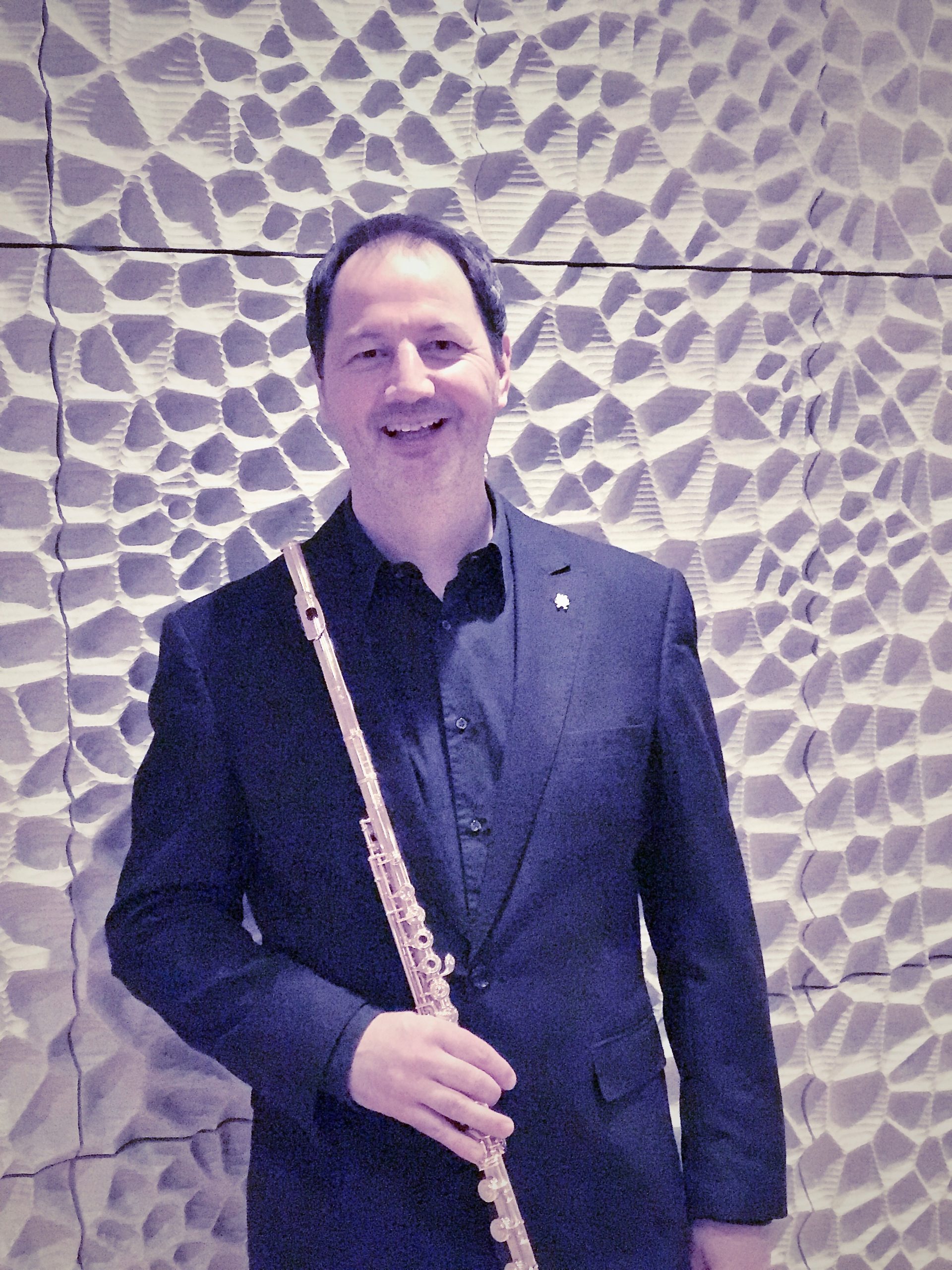
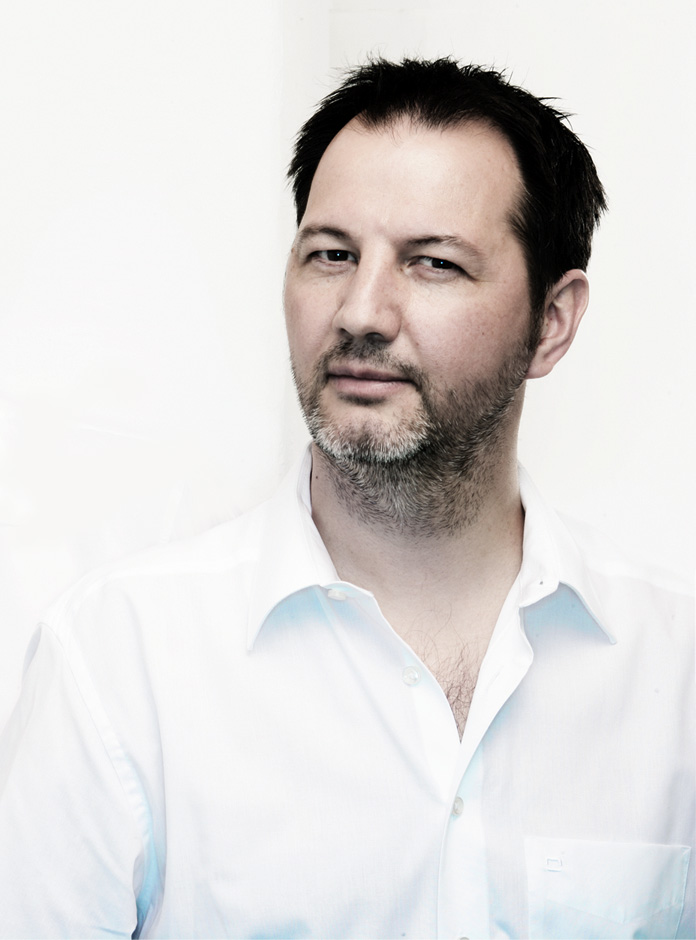
This week I bring you an interview to a great flutist, but also to a great piccolist.
Currently he is piccolist of the NDR Elbphilharmonie Orchestra in Hamburg (Germany). But he has been also solo flute in the Stuttgart Philharmonic and guest flutist in other great orchestras such as Scala di Milano, Santa Cecilia in Rome or Bayreuth Festival Orchestra.
He is also Haynes Artist (he play with an amazing gold 19.5k flute) and he is teacher in the Hochschule für Musik in Hamburg.
Yes, he is Jürgen Franz, from Hanau am Main (Germany), birthplace of Paul Hindemith.
We have made this interview that I hope you like! And if you like it, you know, share it with your friends! 🙂
How did you begin in music?
At the age of four years I started with musical education and playing the recorder. As my father was a music teacher, we always were involved with music in our home. And at the age of eight, I started to play the piano as well.
How did you begin to play the piccolo?
When I was twelve years I started to play the flute. Then, after half a year of flute playing, I started to play in my father’s wind band. There was always a need of piccolo playing too.
So I did it and I enjoyed playing the piccolo in all the marching music and traditional wind music.
Which piccolo do you play?
I’m very lucky to have two really outstanding Instruments.
One is a very old Philipp Hammig Piccolo. Mr. Wolfgang Dünschede, former piccolo player from the Berlin Philharmonic, offered his piccolo to me. When I played it, I was suddenly convinced about the qualities of this particular instrument. Also Mr. Jörg Rainer Lafin was a previous owner of this piccolo when he was an active piccolo player in Berlin. It’s strange, but somehow, I can feel that this piccolo played all the repertoire with these great players and with all the great conductors.
The other is a Helmuth Hammig piccolo. I also got this from a friend in Berlin. For this I have three original headjoints. But as I don’t like to mix headjoints, I prefer one of these three. It’s a great instrument, and very well manufactured.
Both instruments have a nice and smooth sound. Most important, they are able to blend and have a special voice in the solo parts.
What’s the most curious thing that has happened to you in your career as musician?
One curious situation was happening in Royal Albert Hall in London. We played Tchaikovsky 4th symphony! As every piccolo player knows, on the beginning of the third movement you start to concentrate and to be focused on the famous piccolo spot. As my colleague and I walked around London before the concert to meet some friends at Top Wind Shop, we were talking about Albert Cooper and James Galway and their great time in London. In this particular moment of the symphony I remembered one of the classes with Sir James. He teached me not to be nervous. He said „Just don’t be nervous!”, what in a way was not a help in that moment. But some years later I recognized the truth in his words, and also in the moment of the Tchaikovsky symphony I remembered his advice.
The funny thing was that next morning after the concert I got phone call from Sir James and he said: „Hey Jürgen, I saw you on TV last night! Bravo for the great piccolo playing!“.
Which piccolo orchestral excerpt has been the most difficult one for you ever? How did you prepare it?
In my opinion the most difficult places in the repertoire are the pianissimo spots which arrive after some minutes of not playing one note before.
To solve these moments, I try to stay in the mood of the music and don’t get lost with concentration to be focused on the music.
The difficulty for a piccolo player is to play short difficult spots and maybe wait some
minutes for the next spot. These up and downs in concentration are the big challenges in the work of the piccolo player.
In your opinion, which one is the most beautiful melody for piccolo? (Orchestra or any piece)
Personally I love the singing melodies. There are some beautiful soli in Schostakowitsch symphonies and in Ravel’s music. It’s always like some salt in the soup when the colour of Piccolo is audible.
Also it’s a great pleasure to play all the outstanding virtuoso parts. The challenge to play everything perfect, because nearly everything you do as piccolo player is audible.
I also love to play the Liebermann piccolo concerto.
You give lessons in the Hochschule für Musik in Hamburg. What do you try to transmit to your students?
Yes, I’m Professor for flute in the Musikhochschule Hamburg.
First of all, I think a teacher has to be a good motivator for the students to work with themselves. As a flute teacher, I have to give advices about how things work on the flute and piccolo. I also have to teach the music, the rules and the expression, and how the student can transport all this to the audience.
After all the technical aspects with the instrument, the music has to be most important. The rules of the music: phrasing, metric, background information, etc. have to be learned like a language.
In my opinion, the best way is to make realisation before interpretation. Rarely is the opposite way!
You play the piccolo in your orchestra, but you have also a very intense activity as flutist. Wouldn’t you prefer to be a pure piccolist?
I’m very happy not to think in these kind of boxes and to be able to change between the instruments how I like. I know that people have more ease to put people in boxes.
For example, when I was still first flutist in the Stuttgart Philharmonic, the day after I won the audition as piccolo player in Hamburg I got two phone calls from famous orchestras to play as a piccolo player. I asked them why they never called me before, so they said:
„but you are a good piccolo player, you just won a piccolo position in the NDR“. For me it was not as clear. Why should I change from a flute player to a piccolo player just in one day?
I believe much more in the music, and the music is not changing when you play flute or piccolo. Of course, every position you play has its own difficulties. But when you really studied the flute in all aspects, you should be a complete player: as first flute, second flute, piccolo and even the alto flute, with all the knowledge you need for this.
As a complete orchestral player, I’m the solo piccolo in the NDR Elbphilharmonie Orchester, and I still play as a solo flute in some orchestras. I really enjoy to do change between all this and don’t feel any borderlines between the flute and the piccolo.
As a teacher, I try to motivate my students to be flexible too, and as a chamber musician and soloist, I love paying the flute anyway.
As I am a Haynes Artist, I have the great pleasure to have a W.S. Haynes Flute, which combines the tradition with the modern „state of the art“ manufacturing.
How do you see the current musical outlook?
As far as I can see it from the last 30 years, since I start as a professional player, I see more and more fast careers which are not based on a well fundamental education.
If we look for the great players, they mostly had time to make experience to grow as a musician and as a person. They played in great orchestras, with the best soloists and great conductors. From this point they made their career as a teacher, chamber musician or a soloist.
In our actual time, we find so much of the so called „social media careers“, which are not having the chance to grow and to get this fundamental education.
[Tweet “Interview to Jürgen Franz, solo piccolist of the NDR Elbphilharmonie Orchestra”]
And finally, some advice for our readers.
Love the music, love the instrument, and enjoy yourself in making progress!
“If you put all your love and passion in what you do and your activity as musician is your priority, then you can do a career. For sure. Just believe on it.”
We know that in Italy there is a huge source of wonderful flutists, and some of them have been on this blog, like Paolo Taballione or Silvia Careddu. But there are much more, and there is a great flutist that I have the big pleasure to have on this occasion on my blog.
He is Andrea Oliva, principal flute at the Accademia Nazionale di Santa Cecilia Orchestra in Rome and international soloist, as well as teacher in some conservatories in Italy. To sume, a flutist that doesn’t stops due to his big quality.
I hope you like this interesting and funny interview!
And if you like it, share it on the social media! 🙂
How did you begin in music?
I began at the age of 6 with all the “flauti dolci” family (block Flöten), thanks to a private teacher paid from our family in my primary school. In Italy, the public school doesn’t pay the music instruction, except 3 years from 11 to 14 years old students. Then I started piano lessons (for 2 years at conservatory in Modena) and singing in a white voice choir (knaben chor). After that, I just studied flauto dolce for 3 years, until 14 years old. Then I wanted to do music again in the conservatory but…to sing! Yes, I wanted to be a tenor (I come from Modena, like Pavarotti 😉). I was too young for that, so I started at the age of 14 with traverso flute waiting the age when I could be able to sing… Never came that day! Too felt in love with the flute! Today I’m very happy about that choice.
[Tweet “Interview to @Olivaflute, principal flute at the @Santa_Cecilia Orchestra in Rome (Italy)”]
What’s the most curious thing that has happened to you in your career as musician?
Probably when, during a concert playing with a pianist, I almost fell down because of a strange movement I did with the feet. 😂
You combine your work in the Accademia Nazionale di Santa Cecilia with concerts as soloist and chamber music. What provide that to you and how do you combine it?
I’m happy because my orchestral job is not a full job. We are 2 principal flutists in “Accademia nazionale Santa Cecilia” Orchestra, so we can divide the season 50% each. In the free weeks I organize my chamber or soloist music life, plus I put my lessons. I’m teaching “high perfection courses” in 4 Italian Academies regularly, and I have my regular class in Conservatorio in Lugano… I need free weeks from the orchestra!
As you say, you teach in the Conservatorio della Svizzera Italiana in Lugano. What do you try to transmit to your students?
My main teaching activity is in Lugano, at Conservatorio CSI. I teach there to 10/13 Bachelor students (20% of the class) and Master students.
I try to transmit all my passion about music and flute practicing, suggesting to the them the studies and activities that helped me during my age of study. And also what they should listen as “ideal music model”, like I did when I was young.
I ask them to practice a lot, but also with the best quality, so they can obtain as soon as possible all their musical goals.
You have bonds with the great Sir James Galway. What can you say about him? What do you learn from him?
He is the Master of the Masters. He concentrate in one person the best you can obtain with the flute and the career, being also a great person. From him, mainly, I learn how to concentrate and optimize the practicing to obtain the best in my performance. And he is always an inspiration for me about the quality and the vitality of the sound. He often says that each sound produced from the flute must be music. I think it is a strong message for everyone. Still today I send to his masterclasses a lot of my students to learn from my main inspiration.
How do you see the current musical outlook?
I think the level of the flutists now is very high. There are very good young musicians, and the importance of the flute in the regular music season is always more. I’m happy about that.
And finally, some advice for our readers.
Advice? Practice, practice, practice! If you put all your love and passion in what you do and your activity as musician is your priority, then you can do a career. For sure. Just believe on it.
This week I bring you a new interview. I have had the opportunity to bring to the blog a flutist who stands out a lot in the best competitions and who recently overcomed his trial period in his new orchestra.
He is the korean flutist Yubeen Kim, principal flute of the Konzerthausorchester Berlin. An outpouring of hard work, closeness with audience and good music.
I hope you like it! And if you do, share the interview in the social media! 🙂
Photo: Anne-Laure Lechat
How did you begin in music?
My father is a contrabassist in an orchestra in Korea, so I was really friendly and close to music. I could listen to music easily and went to the concerts that he was playing. And I also liked very much the music myself.
My parents suggested me to learn the piano and the violin when I was around 6 years old. I liked so much playing piano that I learned it for a long time.
When I was around 9 years old, I followed my mother to the flute lessons, that she went as a hobby. Those moments made me become a flutist. I loved the flute since then.
You have made some competitions with a great success. How do you prepare the competitions?
I think it is really important nowadays to participate in a competition that we can have real opportunities to have career as musician. But it is a dangerous way also, because we think too much just to win the competitions.
I think we have to have a reason why do we want to win the competition and which is our goal. My goal helped me a lot in why I had to practice for the competition, how could I communicate more with the public (which is also the juries) and how could I really show my personality in music. Music is magic, and it makes us happy, sad, nervous, cold or hot. Music is really precious. It helped me to control myself to practice well and reasonable. Practice makes perfection, but it would not be compulsory. I mean, we have to really “enjoy” the music.
I prepared the competitions in this way of thinking. We have to think about why are we doing the music. Probably this way has worked well for me and I am really happy to be a musician and an artist!
[Tweet “#Interview to Yubeen Kim, principal flute of the @_Konzerthaus Orchestra in Berlin (Germany)”]
You won recently the Solo Flute position in Konzerthausorchester Berlin. How was the audition? How do you feel in Germany?
Nowadays I am listening and voting in the auditions of the other instruments to choose new colleagues for the vacancies in Konzerthausorchester Berlin. I learned from these auditions that it is really difficult to decide only one person for one position. And now I can understand why the Solo Flute position audition was held 2 times, plus the audition as guest player with the orchestra.
I had first a final round with 4 flutists, and the second time, a final round with 3 flutists. The conductor made us play the orchestral excerpts with the orchestra, but they couldn’t decide one and decided again to invite us as guest principal flutists during their season. Finally they decided to trust me after a concert session with the Konzerthausorchester and Ivan Fischer, our Chief conductor, for the trial year. Now I am really happy to be an official principal flutist in the wonderful Konzerthaus Berlin with nice colleagues. I just need to develop my German!
Photo:Taeuk Kang
Are there many differences in the orchestral and flute world between Europe and Asia? How do you feel it?
I feel more freer and more natural in the way of originality and musicality in Europe, and really solid in technical aspects in Asia, where we are working hard for it.
Nowadays we have many good Asian musicians who have these both qualities.
I learn a lot of things, and respect many European players. Asians have to learn from their culture. The culture is really important, in my opinion, to understand the composer’s personality or the musical character.
How do you see the current musical outlook?
In Korea, we have a lot of development in the musical world, especially pop music and classical music.
We are organizing a lot of classical music concerts and more matinee concerts like in Europe, where we have them quite often. This is a really good way for the audience to approach to the classical music more easily, in my opinion.
I think we have to choose a positive and natural way to develop the musical world, but not in the commercial way that we have as tendency these days.
In classical music is still difficult to find a kind of “job”, this is a reality, but I am sure that we can improve more the current musical outlook in order to make classical music more familiar to the public.
And finally, some advice for our readers.
My goal and dream is to make people feel a variety of emotions with the music.
I would like to suggest to the people who dream to be a musician, to really enjoy oneself with the music. It makes the audience enjoy music.
This week we have a new interview to add to the “Quintessenz” Leipzig Flute Ensemble. With this one we have three, and if you didn’t read the previous interviews, I invite you to do it. Gudrun Hinze (principal piccolo of the Gewandhausorchester in Leipzig) and Christian Sprenger (principal flute of the MDR Sinfonieorchester in Leipzig), told us a lot of interesting things in their interviews!
On this occasion, I bring you a interview to Bettine Keyßer, principal flute assistant in the Staatskapelle Halle and alto flute in the “Quintessenz” Flute Ensemble. A very versatile flutist, open minded and very committed with young people. For me, a person who plays the flute who I learn a lot every time that I play with her in the Staatskapelle Halle.
Bettine tell us on this interview a lot of curiosities of her musical life that I’m sure you will like it. I hope you enjoy the interview!
And if you like it, share it on the social media! 🙂
I started with music while listening to the church music. My father played organ, my sisters played the piano, trumpet and guitar, and my mom, the recorder. When we became older, we joined the choir. My father was conducting.
I grew up in the former GDR (German Democratic Republic). There, if you were quite talented in music, you had the possibility to learn how to play an instrument at the conservatory for free. At the age of 7, I became a student there, still playing the recorder. When I was 10, I could switch to the flute. I deeply adored my teacher and so I wanted to become a flutist since then! Right after school, at the age of 16, I started studying flute at the School of music “Hanns Eisler” in Berlin, finishing there when I was 20 years old.
I started playing the solo piccolo in the Norddeutsche Philharmonie in Rostock and I did this for 10 years. During those years the wall came down. Suddenly we had such opportunities as making a one year break to study flute with Dr. Sheryl Cohen in Tuscaloosa (Alabama, U.S.A.), and to study with Eric Kirchoff in the UdK in Berlin.
What’s the most curious thing that has happened to you in your career as musician?
Well, that happened when I applied for the job in Halle Saale. I still played the piccolo in Rostock when my husband got a job in Halle/Saale, and my family (I already had 2 children) had to move. I wanted to play in an orchestra! There was one open position at the Philharmonische Staatsorchester, one of the two orchestras located in Halle! I tried to win the audition, but it didn’t fit. Two young flutists were tried out (and I was already almost 30 years old!) So I tried to get other positions in Berlin or in Leipzig, I practiced a lot… But then, somebody asked me, whether I was going to play in Halle again. There was supposed to be another audition five days later!! I didn’t know that, and called the office in Halle, asking for a late apply (the orchestra was still on a tour in South America, coming back two days before the audition should take place, and there was no possibility to ask to the flute group…). But then I was allowed to play… and I won! I couldn’t believe that!!
How were your first years in Halle?
After that, I had to work hard to get through the first year, learning how to lead as assistant principal flute and studying the orchestral repertoire my new orchestra played. We travelled a lot and there was a family beside to organize…Yes, I had to learn a lot (I still do!), but I was so happy getting this great opportunity and being a member of this Philharmonische Staatsorchester!
Staatskapelle Halle
How did you join to the Quintessenz Leipziger Querflötenensemble?
During my first year in Halle, I got a call from Leipzig: Christian Sprenger, a former fellow student in Berlin, asked me whether I would like to play a program with the Quintessenz-Flute-Ensemble. They were looking for an alto flute player and maybe… It was other big challenge! I had never played the alto flute before! Luckily our orchestra owned a very good instrument, which I was allowed to play. And so I became a member of Quintessenz! I love the sound of the alto flute, it’s gorgeous. I’m really happy to play together with those inspiring flutists, who became friends of mine.
[Tweet “Interview to Bettine Keyßer, principal flute assistant of the Staatskapelle Halle and alto flute of the Quintessenz Flute Ensemble”]
What do you find special of this unusual instrument?
Besides the weight, what I had to get used to, there are some differences between the flute and it’s bigger sister: I have to open up wider and find the right position within me. I think I do this more while playing the alto flute than while playing the flute. The articulation has to be more direct, using more consonants. The alto is simply bigger, and you have to fill this bigger tube… You have to look for the soul of the instrument, but this is the same as you have to look for with any other instrument… Within the ensemble I often have to play more dominant as I want to. This is because of my place, where I sit or stay. I´m playing away from the audience and I have to keep this always in my mind. The best thing about this place and all in all is to stand and to play together with Christian, who plays the bass flute. It is just great to be part of the base of our ensemble.
In my opinion it is so important for us as musicians to reach our youngsters, the youth, who does not have any access to classical music and to our culture at all! We have to leave our theaters and houses and have to go to the youngsters to show this side of our society our history and our humanity in a better way. And we have to invite the people, refugees too, to make them interested in our culture! If we make plans for just a little audience, only for the older or the younger people, it is going to be difficult. In Germany each taxpayer and the state are paying the culture, so we are committed to provide them all our very best, to attract our audience… And we have to show to our audience, that we are professionals, who love their job. Otherwise, how should we reach them?
And finally, some advice for our readers.
Be a good critical of your own, your life, your flute playing, your society where you live in. Always find some positive aspects! Be careful with yourself and patient, and have fun with what you love: making music, flute playing, the environment… And probably, we all need courage and a lot of good ideas during those times! This is my advice for everybody of you and hopefully it might be not a pipe dream…
“The piccolo flute can be an amiable instrument with a sparkling technique. When you make friends with it, it will sing to you with an angel’s voice.”
Today I bring you a interview to a specialist in piccolo, an instrument that still had not his first interview in this blog, and today we are going to premiere setting the bar high.
Gudrun Hinze is since 1993 the solo piccolist from the Gewandhaus Orchestra in Leipzig (Germany), and also piccolist since 1999 in the Bayreuth Festival Orchestra. Besides giving lessons and having recordings with piccolo repertoire, Gudrun is the piccolist from the Leipzig Flute Ensemble “Quintessenz”.
I have had the pleasure to hear her in live, with the Gewandhausorchester and with the Quintessenz Flute Quintet (with Christian Sprenger), and I can say that she is without a doubt an excellent piccolist. It is incredible how thrill listening to her playing piccolo!
I hope you like the interview! 🙂
How did you begin in music?
I started my musical education at the age of 5. I always wanted to play the flute, but my fingers were too small, so I had to play the recorder until I grew up and was able to handle the flute. So, I switched to flute-playing at the age of 10.
When I was 11 years old, I joined to a program for young students who wanted to prepare to the conservatory. I had lessons in musical theory, learned the piano and took part in chamber music and youth orchestra from this young age on. This program was completely for free. I have four sisters, and my parents did not have very much money to spend. They could not have payed for all theses subjects, but my teachers recognized my talent and recommended me for this program.
From my first self-owned money, I bought a piccolo flute at the age of 18. I started my education at the conservatory of music even before I left school. Fortunately, I had no difficulties in learning, so I was able to make my Abitur in Bonn while I was already studying flute in Düsseldorf.
As you can see, I worked really straightforward to become an orchestra musician!
What’s the most curious thing that has happened to you in your career as musician?
I will always remember in my life the year 2010. I wanted to record a CD with piccolo works, and I asked some of my colleagues in the Gewandhaus Orchestra if they would like to join this project, but I did not have enough money to pay the whole orchestra. It ended up in more than 40 musicians joining the production without any salary, just for friendship, and my employer gave me the big hall of the Gewandhaus for free for the recording! It was a magic moment in my life, and I will never forget the friendship and the generosity of so many people. Here’s what we did:
How did you join to the Gewandhausorchester? How were your firsts years in Leipzig?
I made an audition and a year of trial in the Gewandhaus Orchestra in 1992/3. After that, the flute section and Kurt Masur decided to offer me the position as principal piccolo player.
I went to Leipzig 1991, having grown up in the western part of Germany before. The peaceful re-unification just had happened…it was like a journey 50 years back in time. The former GDR was just about to be integrated into the Federal Republic of Germany. We did not get as much salary as the people in the western part, there were only completely worn-out apartments, streets, buildings, no telephone, no internet, heating with coal ovens…but it was all worth it! Now Leipzig is a blossoming place and a jewel in the line of German cities with rich culture and a high standard of living.
The Gewandhaus Orchestra is ranked to be the 4th best in the world, and I must admit, it feels even as the best orchestra in the world!
The piccolo is an instrument that not all the flutists like to play. What do you think that makes piccolo a special and enjoyable instrument to play?
As for any instrument or subject in the world, you have to distinguish between its abilities, and your own skills in handling them. Most flute players judge the piccolo from the first moment they try to play it – and mostly they try to play it exactly like a flute. But the piccolo is made from a different material, it is much smaller and more fragile, and it works more like an old transverse flute because of its conical body. It needs a lot of time and understanding to handle it correctly.
If you treat an instrument with respect, commitment and love, it will give you a rich and loving answer. The piccolo flute can be an amiable instrument with a sparkling technique. When you make friends with it, it will sing to you with an angel’s voice.
You make with your flute quintet “Quintessenz” a great work for the people and musicians. How does this quintet appear? How do you combine the work in the orchestra with the quintet?
In the last 21 years, Quintessenz has developed to an important part of my professional life. I play the piccolo part in the quintet, I write the arrangements, make the publishing of the sheet music, work as admin. of our homepage and Facebook page and do a lot of organisation work.
We try to perform round about 6 concerts per annum, and additional CD or video productions. It is quite tricky to integrate all these activities into the orchestra schedules of our three home orchestras, but it’s of course worth it!
[Tweet “Interview to Gudrun Hinze, solo piccolo from the @Gewandhaus Orchestra.”]
Chamber music is always a good thing to control your skills, to practise balance, sound quality, communication and your creative potential. The orchestra work inspires our quintet and also the other way round!
After such a long period of playing together, we feel very proud and honoured that so many young people in the world follow our tracks now! There are much more flute ensembles and flute choirs in the world now than before!
How do you see the current musical outlook?
I see two different perspectives: on the one hand, globalisation and drifting into a society of consumption and mass media – on the other hand, a crucial need of precious, demanding and traditional culture. Classical music is a part of the European identity, so I am optimistic, that it will last for a long time. Actually, there are statistics in Germany that the audience for classical concerts and opera has increased in the last years!
I also made the experience with students and my younger colleagues, that in the younger generation there is a lack of knowledge of old history, of religious traditions, of language skills beyond small talk, of folk songs and church songs, of fairy tales…Just everything that could make you understand what composers some hundred years ago could have had in mind when they wrote their music.
Just for example, I once asked an Asian student, what the words of our flute aria of St Matthew’s passion “aus Liebe will mein Heiland sterben” meant – she answered that Jesus was really lovesick!?!
Or secondly, we made a concert tour to China with the Gewandhaus Orchestra and our Chief conductor Riccardo Chailly some years ago. As all orchestras, we had to play a Chinese traditional song at the end of the concert, in honour of our host. But we played it too quickly and in a marching-band style with our Italian chief, so several people of our Chinese audience asked me after the concert, what piece we played in the end! They could not recognize their own song, because we played it in the wrong “pronunciation”!
I would like to encourage every musician to make studies about life in the past, culture, politics, skills, habits, human life in general. It will make your performance more authentic! I am deeply convinced that music is NOT an international language, but a very specific idiom of every nation. Which makes it richer and much more interesting!
“To be a successful flute player and to be famous are two very different things. And I’m very happy to be the first one.”
The interview I present is, without any doubt, very very special for me. Since I began with the flute and to be conscious that I would be a professional flutist, I have had some flutists that have been examples for me.
From my studies in the music school, where all of us have as a reference our teacher; in my case Simón Fernández. Also later in the bachelor or postgraduate, as happened with teachers as Júlia Gállego, Fernando Gómez or Antonio Nuez. Or nowadays in my master studies with my teachers Irmela Boßler or Christian Sprenger. Even with great classmates and friends as Francisco López, Diego Aceña or Ana Naranjo.
Apart from these mates and musical friends, closer but equally admirable, there are always some “unattainable” stars with whom you always dream to listen in a concert or to know.
Right, as I announced in the 7 concerts you shouldn’t lose if you are flutist, the coming 16th, 17th and 18th December 2016, Emmanuel Pahud, international soloist and principal flute of the Berlin Philharmonic Orchestra, will play the C. Reinecke’s flute concerto with the Spanish National Orchestra in the “Auditorio Nacional de Música” in Madrid.
I have had the great pleasure to share with him a rehearsal of the Berlin Philharmonic Orchestra and afterwards to chat with him in order to share it with you. I hope you enjoy as much as I enjoyed preparing this interview. 🙂
Special thanks to Elsa for all the help. 😉
How did you begin in music?
Basically, when I was 5 years old we moved with my family to Rome (Italy), and the neighbours upstairs were a musical family. They had children who were playing the violin, the flute, the cello and the piano. And for some reason I started whistling and singing what the flute player was playing. I said: “What is this?” My parents asked upstairs and we were told it was Mozart Flute Concerto no.1, so I said : “I wanna play Mozart Flute Concerto no.1”. And this is how I started. My younger brother picked the violin.
In which way did you studied when you were a child in order to be solo flute of the Berlin Philharmonic Orchestra and international soloist?
Never, never. Only when I got my first job and was 19-20, I started winning competitions and becoming one of the better ones in my generation internationally. So at that moment, when the job in Berlin opened, of course I prepared intensively for this job. But I never thought before about becoming a flute player, becoming principal flute of the Berlin Philharmonic, about becoming a soloist or making recordings. It was never an ambition, it just happened.
We know that you have a huge professional activity. What do you tend to do when you study? How do you prepare your concerts?
It depends, some things are in my repertoire. The things I learned before I was 22-23, they are there for my life. The things that you learn later, you have to work on them every time again to reacquire everything. This is something which depends really on which piece or project you have to do currently and which one is the next one. Basically, I always see each project where there is solo, orchestra or chamber music as an open window to the next project all the time. So for me is like oxygen, but with the age now I need a little more time; half a day, one day maybe, to turn around and think about what’s going to be next.
[Tweet “#Interview to @EPahud in @JuanValFlauta ‘s #blog”]
With which flute do you play? Is it made exclusively for you?
No, I have two flutes I play. One, since 1989, is Brannen Cooper with a Sheridan headjoint, all gold 14 kt. This is the one I had when I was 19. I bought it with my first competitions prices. And recently, I thought Haynes did a wonderful development on the instruments and a wonderful research, and make very funny instruments. So I’m also currently using a Haynes flute. It depends on which project. I would say in the orchestra is more the Brannen, and for recitals and chamber music is maybe more the Haynes.
What are the most curious things that have happened to you in your musical career?
The fact that how I came to music or music came to me is the most curious thing that probably happened, because there was absolutely no reason for me to encounter this thing. It changed my life basically, what happened to me when I was 4-5 years old. It really changed my life. Apart from this, there are many funny things or incidents that happen regularly, but this not the worth talking about it.
At least in Spain, a lot of flutists are worried, when they finish their studies, about finding a job. And I think that is not easy. What do you recommend to all the flutists that have finished the studies and who have not found a job with the flute?
EP Josef Fischnaller foto_91787
You know, I don’t think is a flutists problem. It´s a society problem. It is true that more than the 40% of the young Spanish students after the diploma, so qualified young women and men in the age 25-27, don’t have a job. They are jobless for the first years after the study. It’s a question about the society. Why do we want people to study for what jobs? But it’s not only in the music. It’s in particular true also for sciences, for research, for mathematics, economics, statistics, etc… I think there are maybe solutions at a political level to change how the society is working. But unfortunately they are not necessarily popular. We’ve seen many countries try different models. That’s the case in Spain, the case in France or in Germany for example, to take three big countries. Or also Great Britain, or Italy. Three big countries inside Europe. But there are very different social and economic models. Certainly if the money is well invested and better redistributed, probably we can save more jobs.
The advice of course is that if you go international, you widen your horizon. It doesn’t mean that you will have a job next to home, but at least you can have a job (probably within the other end of the planet). Even if you have to go to South America, or Australia, New Zealand, Africa, Asia… there’s a lot of humanitarian things also that can be done in many different ways and many different things. These are jobs also. And they might be better connected to what you studied than you think actually, because people even when there is a tsunami somewhere, they also still need music.
And getting closer into the orchestral world… What do you expect to listen from a flutist in an orchestral audition?
You know, first of all when you are playing an audition, don’t try to impress anybody; try to please them. Because what you need is the vote from the jury if you want to get the job. It´s not to get satisfaction, this is not at all important. First of all, study the orchestra you are applying for: check on the internet, on YouTube, on which other documents are available; how do they play, what do they like, how can I play something in a way that is gonna please them, than is gonna make them feel: “Ah yes, this is our style, this is our guy, this is our person, this is what we are looking for”. Because this is what we need to do. That’s the first priority, to think properly about what is an audition. It´s not about showing off, is not a competition like who is gonna go first from the traffic lights. No. Who is going to arrive first, in the end, is who has shown through the program that they understand how this orchestra is working.
Do you think that we are a lot of flutists?
It depends. I mean, when we were looking for a principal piccolo, we looked for 10 years. We hired two persons, but the second time was the right choice. We did many auditions, nearly every year. A lot of people auditioned, but there are generations where is not the right moment or time, or you need to train some people. This is what we try to do, because we have the academy programme. And in one of the auditions we asked the two finalists (since they were relatively young) if they would be interested to come in the academy and study our style of performance and get some knowledge and preparation for a next audition. And this is how it ended up. I think is better since we have this academy model, just like every great football club have their own training centre. To pick the young talents quite young, and to raise them ourselves into our style of playing. In this way we can guarantee the incorporation of new generations and people from wide arrays. It is not necessary to have German people. There are a majority of foreign musicians in BPO now. But this is the case of BPO. If you talk about another orchestras, can be different situation, because they have a different position. They are in a different town, they have a different mission, there’ve a different position on the market. We are relatively global players, actually quite kind of “ambassadors of music” if you want. Also for the city of Berlin or for life in Germany. We carry certain values, but we should take other German orchestras like Leipzig, or Dresden, or Bayerischer Rundfunk. There will be some radio orchestras in Germany which will have a very different mission or a different position also.
What do you think about the current musical outlook?
I think it is much more colourful than a lot of people will imagine. Because yes, culturally our society is recessing in the western world, in a lot of a white people countries, I will say. It is a wave that is going down but it will go up again, I’m sure. Doesn’t matter generations. But in some of the countries, some of the territories are going up like crazy. I’m talking about Latin America, China, Korea… You see it of course in the competitions, in the classes, in the students… but also in the concert activity over there; I can tell you there is really a lot in building new concert halls. Not the countries like Japan; it has been slowly going down over the last decade, because it has been going through so much since World War II also. Every country has a different history, and despite these places where is going down, I can see through my travels as a soloist, that there are many other places where is also going up in the same time. It’s a mixed outlook, and depending on where you come from and where you gonna be, and if you’re ready for the world, there are many possibilities.
Do you think that musicians should innovate in order to bring classical music closer to people? What do you do in that way?
Yes and no. I mean, the form of the concert as we know it, or the performance for the public, is relatively new. It is something that was structured around the French Revolution. It was the first time that music was not religious or for the court. It was open to the public, with people who were interested in the music; and not just because it was paid by the king, or the prince, or by the duque, etc… or for the religious purpose. So it didn’t have this meaning of the power anymore, but it was more the power of the “bourgeois” generations. This basically coincided with the end of the classical period and the beginning of the romantic period. It was also the time where the musicians were employed first, and then started to be commissioned. The composers made a different purpose. They started the log writing music about themselves, about the expression, with a lot of crescendo, diminuendo, dynamics, articulation… much more than before. All this changed basically in that time.
E.PAHUD 612 (c) Fabien Monthubert (2)
But the concept as we know it, is quite a recent thing. And we play in our concerts a lot of music that doesn’t fit in these concerts. That comes from previous times where music had another function in the society, or was music from other cultures like we play here. Music from Hungary, from Russia, from America, from Australia, from Northern Germany and Southern Germany, from very different periods within one week in the Berlin Philharmonie. But we all play in the same space, and alone, this is a paradox. And is putting everything a little bit in a format. So the format of the concert is existing, is part of our society. I think we are certainly, as Berlin Philharmonic, quite aware of this through the education programmes that Simon Rattle has introduced. They didn’t exist before. Something that is very important for the anglo-saxon world, because it existed in England, or also in America, for much longer time. It reaches and bring music to people, playing in their spaces. It can be hospitals, schools, prisons,…It can also be in the office, why not? With the flashmobs and this kind of things, being in public places. I think is a very interesting thing to make people aware that this exists. Otherwise they don’t necessarily come to the concert halls.
But there are still a lot of people (not in Germany, not in Scandinavia, not in Northern Europe, but in Southern Europe, or in England or in America…) who think that people who play music is just because they have this hobby, that they are talented. They don’t think that it is a profession. That you are employed to do a job, and that each ticket to go to the concerts serves to pay the musicians. They don’t really realize this thing, which is surprising. Because when they build a house, they understand that they have to pay for each person putting the stones together, for the plumber, etc… And we are kind of the same people. You need an architect (that’s the conductor in an orchestra), you need different handcrafts from every group. As a soloist it is a different thing. They come to see a performance, like acrobatics, like gymnastics, and people in general understand this better. So flashmobs are a good way of making things happen now, making people aware. You can also organize moving flashmobs that go into the concert hall. That’s a relatively new concept. There are many other things to do. I think putting music in a space that is not for it can also be dangerous, because it can sound really bad. And then is not attractive, and is not good for the music in the end.
You have been a lot of times in Spain playing in Valencia, Valladolid, Barcelona, Bilbao, Madrid… and also in the Flute Convention. You will be very soon in Spain to play with the Spanish National Orchestra: Is your first time playing with the Spanish National Orchestra?
Yes, I think so. I played many times in Madrid, in various concert series, recital concertos and chamber music…. But I think is my first time playing with “la Nacional”.
[Tweet “#Interview to @EPahud in @JuanValFlauta ‘s #blog”]
Do you like to go to Spain? What’s the thing that you like more from there?
Sure. What I like particularly in the spanish culture is that there are a lot of generations of flute players. They have the parents, and the children, and also the generation of the grandparents, and their friends…. Many things in Spain are a family thing. Also going to the concerts, I feel. And they are also meeting this people from several generations. Also these flute classes together. It really feels like this family thing. It gives the strong feeling of the power it can give being together and believing about something together. Maybe, in this case,the power of the flute. It is the power of the music, and is great to see the kids very motivated also coming, being eager to be there to listen and to get a picture, a souvenir, an autograph or something to take back home and just to remember that they have been there. And give them just a few words of advice to practise, to motivate them. Because you can be talented, but you still need a lot of training. It’s like athletes: not because they are running well as a kid, they can become olympic champion. It needs a lot of practise, of training, the right diet, the right preparation, a lot of team around, and support from the family, from the state maybe, or from the sponsors… and this kind of things. It is the same for music, to that extent. Reaching the top level is very similar in sports and in music, except we have a little bit longer career…and a little less audience also!
Lots of flutists want to be like you, do you think that you have created a tendency in the way of playing in nowadays flutists?
I’m certainly not in the right position to answer this question, because if somebody can be observed, it is more the flute teachers, the people who are in the jury of competitions… I’m so busy playing myself…. I don’t teach so much, so I’m not in a position to say this. Now, what I think is interesting is when you say a lot of flutists want to be like me. Of course when I was a kid I was admiring Rampal, Galway and Nicolet, who were the three top players. But of course many others who had to be my teachers also. But I never wanted to be like them. I always used the flute to express my own feelings, my own thing. I borrowed some things that they could do really well, I tried to imitate those number of things. So maybe this is more what you mean, like they would like to be in the same position, to have one of the top jobs and be recording, and be one of the very few players who are playing all around the world on this instrument. First of all is exceptional, is not the rule. And there’s no recipe to get there. If you have something to say, and you’re talented, and you practise, and you work a lot, and you find the right people to guide you, and you have the right contacts, and take the chances in the right time, like certain positions that open etc… everything might just develop into this.
Nowadays you have many ways to become famous: with Facebook, YouTube videos, Twitter, social media… I don’t use any of this because I’m from a previous generation. But I understand there are many ways of getting famous there. But if you play classical music to become famous, maybe you should do something else. Because all audience is only 2-3%, 5% in the best case, in the market of music. If you wanna be famous in the show business is better to act, dance, sing, make TV, telenovelas, films… something less cultural. Because what we do… we talk about Stravinsky, Bartok, Mozart, Bach, Beethoven, Brahms… it’s a cultural heritage. I think is a shame to use them for your own fame. It will be abusing and misusing that. I’m very glad that a lot of young kids are seated in my concerts. They are full and there are lot of young generations coming to my concerts. But they should be aware, what it is. To be a successful flute player and to be famous are two very different things. And I’m very happy to be the first one.
As you know, there are some flutists that are now conducting, like Jaime Martín, etc… Have you ever considered to conduct or to teach?
E.Pahud Pull over 019 OK (c) Fabien Monthubert
Never, never. I was offered to conduct by my managers, that also have many famous conductors on the list, when I was 25, 26, 27……. Not offered, but set out as perspective of development of my career. But I have too much pleasure making music myself. I play 150 concerts every year; half of these in the Berlin Philharmonic, half of these as a soloist. I’m really busy every second of the day. And the other days I’m rehearsing and travelling. It’s filling my life. I don’t have time to teach, except one student in the academy of the Berlin Philharmonic. And conducting would mean that if I do a week conducting in orchestra, then I will not be able to play the flute that week. Or I will have to do it on top of that. It is too much. Is too many things at the same time.
I’ll be happy to do some more pedagogical work, with youth orchestras, classes… later maybe, when I should stop being on stage or when I feel that I want to do something else. It could be another point for me to decide, as a proactive decision. That´s how I see it. I think Jaime Martín or one of his predecessor in the Chamber Orchestra of Europe, Thierry Fischer, or Philippe Bernold also, are people who, in their career, had less development towards his soloist activity after ten years, and therefore reoriented their views, still enjoying the same great music. I’m enjoying when I’m playing here inside the Berlin Philharmonic from Brahms to Mahler and Stravinsky. But also conductors, therefore they are playing less. You have to make a choice. Because if you don’t practise two days everybody will hear it. If you don’t practise one day, you can fake it for one day to other musicians around. But if you leave the flute like for one week, you need two weeks to come back again.
And to finish, some advise for our readers.
Well… first thing: breath if you wanna be successful playing the flute. Because we are the instrument using the most air. In all the other instruments you play inside the instrument. You’re saving air compared to us, that are wasting,spilling the air. Therefore we need to breath better. And I try to feel in the air that I am sending it down to my legs first, sometimes breathing for four seconds before I start to play. I think really one bar. And taking the time, thinking with the tempo while you’re already breathing. So you put things together in your mind and you know exactly what are you going to do.
And a second thing: don’t use too much the lips. When you play the flute, it is not a lip instrument, is a wind instrument. Therefore the lips have to let the air come through. If we push too hard, the lips squeeze then too hard. This pressure of the air is changing and moving to the next octave or to the next note; this is how we play wrong notes. And this is why is very important to keep the lips relaxed if we want to have a lot of air coming through in order to play louder (also in order to control dynamics). These are technical advice. And then of course a lot of things I’ve learned through the french flute school. A lot of things that James Galway has learned, were through the french flute school, through his teachers, such a Geoffrey Gilbert, who was also the teacher of William Bennett and Trevor Wye, who basically put the whole Moyse books in english. So it has become completely international now, but this technical standard of playing with scales and arpeggios you can find it in every piece from Telemann, Bach, Vivaldi, Mozart, Beethoven symphonies, Schubert symphonies and variations… It’s all made of scales and arpeggios. If you practise them, then you’re ready for the orchestra and for sight-reading any kind of music. Of course when you play Jolivet, is becomes different harmonies, but very often you’ll find patterns that you’ll have been studying before and you’ll avoid a lot of surprises.
And again, if you learn this things when you are a teenager, then you have them for your life. If you have to learn this things specifically for every piece when you are 25 or more, then is, I’m sorry to say, too late. They are the kind of things that have to be learned in a tender age, when you integrate this knowledge, certainly before the age 22. And then what you learn after is how to use it, when to use it. But technically you have to have this skills before in order to be able to use them as a structured feature in your playing.
Ok! That’s all. Thank you so much for your time and thank you so much for this interview.
Thank you! And I wish a lot of fun and musical expression also while playing the flute Express yourself.
“We have to do much more for children and music, otherwise I think that our classical music will not survive…”
This week we have an interview to a fantastic flutist, the belgian Aldo Baerten. He is Principal Flute in the Royal Flemish Philharmonic, and also teaches in Antwerp, Utrecht and Hannover. I hope you like it!
How did you begin in music?
As a child I went to the local music school, where I started off with solfege classes. After a year I started the flute and later on also ensemble and chamber music.
I was very lucky to have an english music teacher at my regular high school. He is british and made the school into a very musical one, so we had a band, school orchestra, chamber music, choir, etc… and loads of interesting music lessons. Without this man, Adrian Knott, I would never have become a musician.
What’s the most curious thing that has happened to you in your career as musician?
To obtain what you don’t really want, and to not obtain what you really really want… musical life is strange, unpredictable and therefore very interesting.
What you want tooo much, does not happen…
[Tweet “Interview to Aldo Baerten, Principal Flute of the Royal Flemish Philharmonic”]
How do you see the current musical outlook?
The classical music world and the flute world are in tremendous crisis. The future is not bright if we dont bring children at young age in contact with classical music. Why would they like to do something or listen to something they were not in touch with as children? We have to do much more for children and music, otherwise I think that our classical music will not survive the middle of the 21st century. Therefore, jobs as teachers and musicians in orchestras, etc, will become rare, and only very few will be able to live from it.
And finally, some advice for our readers.
Be passionate, be involved, give it all, work very hard, share your passion with others… and there is hope!!!
Hello everybody! I will come back very soon with my blog, but before beginning again I would like that you tell me which things you like more and less of my blog.
For that reason, we will use the hashtag #Flutisugerencias in the social networking. In this way I will know your opinions.
The goal: to improve. And to adapt the contents to your needs.
#Flutisugerencias
I accept suggestions, positive coments and even reviews. But always in a constructive way!
If you miss something here, don’t hesitate to use the hashtag #Flutisugerencias in Facebook, Twitter o Instagram.
Thank you for your help!
[Tweet ” My #Flutisugerencia for the @JuanValFlauta blog”]
I bring this week an interview with a lot of meaning for me. Christian Sprenger, solo flute of the MDR Symphony Orchestra in Leipzig and member of the Quintessenz flute ensemble, has been my teacher of orchestral repertoire during my first year in Leipzig (Germany). From him I have been able to learn a lot as a musician, as a flutist and as a person. Without a doubt, this interview is a clear reflection of how he is. From here I want to thank him his great job. I hope you enjoy this interview!
How did you begin in music?
I was born in a musical family. My father is conductor and pianist; my mother singer. At the age of 5 I began to play the recorder. My sister plays violin and we started very soon to play music together regularly every weekend just for fun.
Wie begannen Sie in der Musik?
Ich bin in einem musikalischen Elternhaus geboren. Mein Vater ist Dirigent und Pianist; meine Mutter Sängerin. Im Alter von 5 Jahren begann ich Blockflöte zu spielen. Meine Schwester spielt Violine und schon bald wurde regelmäßig an den Wochenenden uns selbst zur Freude gemeinsam Musik gemacht.
What’s the most curious thing that has happened to you in your career as musician?
The curious things have been often also delicated situations. I went once in the afternoon to the concert with our orchestra. I entered in the dressing room and wanted to take out my flute about 15 minutes before the beginning of the concert, but the case was empty. I hadn’t kept the instrument after practising at home. It was winter and there was ice in the road, but even so I was able to go with my car to take my flute.
Naturally, that concert was going to be a live broadcast by the radio. There, no one knew when I was going to arrive, so the radio announced that the beginning of the concert would be delayed by technical reasons and in the meantime a different music was broadcast.
Was ist am kuriosten Ding, dass in seiner musikalische Karriere zu Ihnen passiert haben?
Kuriose Ereignisse sind ja oft auch heikle Situationen gewesen. So ging ich einmal Abends zum Konzert mit unserem Orchester. Ich zog mich in der Geraderobe um und wollte dann ca. 15 Minuten vorher meine Flöte auspacken, aber der Kasten war leer. Ich hatte das Instrument nach dem Üben zu Hause nicht eingepackt. Es war Winter und Glatteis auf den Straßen, aber ich haben es trotzdem mit dem Auto noch geschafft, die Flöte zu holen.
Allerdings wurde dieses Konzert live im Radio gesendet. Da niemand wusste, wann ich wirklich zurück komme, wurde im Radio angesagt, dass sich der Beginn des Konzertes aus technischen Gründen verzögert und zwischenzeitlich eine andere Musik gesendet wird.
How did you join to the MDR Symphonieorchester? How were your firsts years in Leipzig?
In 1989 I got my first position, still during my studies, as 1st solo flute in the Leipzig Gewandhaus Orchestra. As this position was going to disappear in 1994, I transferred to the solo flute position in the MDR Symphony Orchestra in Leipzig.
The firsts years in Leipzig were marked by the beginning of a new age of democracy after 40 years of the GDR dictatorship.
I’m very grateful for being able to be witness of this exciting moment.
Wie begannen Sie bei MDR Symphonieorchester zu arbeiten? Wie war die ersten Jahre in Leipzig?
1989 erhielt ich meine erste Stelle noch während meines Studiums als stellvertretender 1. Soloflötist im Leipziger Gewandhausorchester. Als diese Stelle 1994 eingespart werden sollte, wechselte ich auf die Position der Soloflöte ins Leipziger MDR-Sinfonieorchester.
Die ersten Jahre in Leipzig waren geprägt vom Aufbruch in eine neue Zeit der Demokratie nach den 40 Jahren DDR Diktatur.
Ich bin dankbar, dass ich diese spannende Zeit miterleben durfte.
How do you see the current musical outlook?
I think we live in an age of fast development and big agitation. The advantages of a quick Internet, the never-ending oportunities to travel and the approachment of people all around the world harbor also a lot of risks in themselves. In the field of classical music, I see an evolution to a bigger superficiality connected to a counterproductive perfectionism.
It is not paid enough attention to the deepening in ancient music works and to the question about the essence of the music.
On the other hand, it is produced a big interest for shows and chic performances.
Conditions for those who want to promote a a positive development, are worse. Beyond everything there is a lack of funds and sponsors to support the work of these artists and create the platforms in order to spread their messages.
Wie sehen Sie den aktueller musikalischen Überblick?
Ich denke wir leben in der Zeit einer rasanten Entwicklung und eines großen Umbruchs. Die Vorteile des schnellen Internets, der unendlichen Reisemöglichkeiten und des Zusammenrückens der Menschen weltweit birgt auch viele Gefahren in sich. Im Bereich der klassischen Musik beobachte ich eine Entwicklung zu mehr Oberflächlichkeit verbunden mit einem kontraproduktiven Perfektionismus.
Dem tiefen Eindringen in die Werke alter Musik und der Frage nach dem Wesen der Musik wird meines Erachtens zu wenig Bedeutung beigemessen.
Dagegen wird zu großes Interesse für Shows und schicke Performances erzeugt.
Die Rahmenbedingungen für diejenigen, die eine positive Entwicklung vorantreiben wollen, werden schlechter. Allem voran fehlen Gelder und Sponsoren, um die Arbeit dieser Künstler zu unterstützen und diesen Podien zu schaffen, ihre Botschaften zu verbreiten.
And finally, some advice for our readers.
Not to get tired of fighting to preserve the “classical music” in the cultural heritage.
Und endlich, ein Ratschlag für unsere Leser.
Werdet nicht müde, für den Erhalt des Kulturgutes „Klassische Musik“ zu kämpfen.
We use our own and third-party cookies to ensure the website works properly, measure usage, and improve our services. You can accept all cookies, reject non-essential cookies, or configure your preferences. Cookie policy
Configure cookies
Required for the website to work correctly. They cannot be disabled from this panel.
Help measure site usage and improve its content.
Allow advertising, campaign measurement, or ad personalization.
Store preferences or enable non-essential external content.






 Just for example, I once asked an Asian student, what the words of our flute aria of St Matthew’s passion “aus Liebe will mein Heiland sterben” meant – she answered that Jesus was really lovesick!?!




 I was very lucky to have an english music teacher at my regular high school. He is british and made the school into a very musical one, so we had a band, school orchestra, chamber music, choir, etc… and loads of interesting music lessons. Without this man, Adrian Knott, I would never have become a musician.
 The classical music world and the flute world are in tremendous crisis. The future is not bright if we dont bring children at young age in contact with classical music. Why would they like to do something or listen to something they were not in touch with as children? We have to do much more for children and music, otherwise I think that our classical music will not survive the middle of the 21st century. Therefore, jobs as teachers and musicians in orchestras, etc, will become rare, and only very few will be able to live from it.


 The curious things have been often also delicated situations. I went once in the afternoon to the concert with our orchestra. I entered in the dressing room and wanted to take out my flute about 15 minutes before the beginning of the concert, but the case was empty. I hadn’t kept the instrument after practising at home. It was winter and there was ice in the road, but even so I was able to go with my car to take my flute.
 I think we live in an age of fast development and big agitation. The advantages of a quick Internet, the never-ending oportunities to travel and the approachment of people all around the world harbor also a lot of risks in themselves. In the field of classical music, I see an evolution to a bigger superficiality connected to a counterproductive perfectionism.