Inicio Blog Página 3

Interview to Myra and Peter Pearse

0

This week we have again another “flutistic” married couple. The first one were Isabel Souto and Christian Farroni, but now we have here Myra and Peter Pearse, both flutists in the Asturias Symphony Orchestra (OSPA). Discover all about this couple full of flute. I hope you like it! Enjoy it!
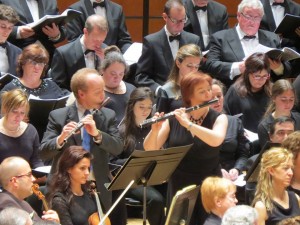
 

Peter and Myra Pearse


  • How did you begin in music?

Myra:  My Mum and Dad are music lovers. There was always jazz and traditional celtic music playing in our house and in the car when we were driving places. When I was 7 we moved from Britain (my parents are Scottish) to Minnesota, and my musical education began there at the local primary school. I had a friend who was a year older than I and was learning the clarinet in the band programme. I remember not being very patient about waiting until I was in 4th grade and allowed to choose an instrument. When the time came and the school sent home the parental permission slip, I asked for the clarinet! However, my parents weren’t very keen on that instrument. They really thought that the fiddle, a very popular instrument in my Dad’s home, the Shetland Islands, would be ideal. Unfortunately, there are no fiddles/violins in a band programme, so they asked if I liked the sound of the flute.  I said “yes” and fell in love with it. My first three years were with the woodwind teacher, who was a clarinetist. When I was in my last year at primary school he told my parents to find me a private flute teacher because I loved it so much. I was very lucky to join a wonderful youth orchestra organisation when I was in the second year of middle school, the Greater Twin Cities Youth Symphonies. There were 8 orchestras ranging in age from primary school through the last year of high school. Entrance was through very competitive yearly auditions and the conductors were wonderful music educators.

Peter PearsePeter:  Before my Dad was conscripted into the RAF (air force) he was very active as a singer so the house was also always full of music. I started learning the piano when I was very young, but remember watching a TV programme with James Galway and absolutely fell in love with the flute. A couple of years later, I started secondary school and that’s where I finally started to have flute lessons. I was given a flute on a Friday and I went back on Monday playing Annie’s Song and some scales which I had worked out and never looked back.


  • What’s the most curious thing that has happened to you in your career as musician?

     Peter: Apart from both ending up working in the same orchestra? The way I actually landed the job here in Asturias was like something from a surrealist novel.  Having completed my studies with WIBB and Sebastian Bell in the RAM in London, I then followed Myra to Indiana University in Bloomington (we met in London when she came over to study at the Guildhall for a year). I spent a wonderful year and a half there with Peter Lloyd and Kate Lukas.

     Meanwhile, my recently retired parents were sailing around the Bay of Biscay and the French coast and had organised a series of friends to consult the Daily Telegraph for any adverts about European orchestral auditions. This was before internet! Every week somebody checked the job vacancies, apart from one week, when my parents had recently returned to the UK. My Mum realised what had happened and started asking her neighbours if anyone had bought the previous day’s newspaper. Somebody had, but the page with the ad for the Asturian orchestra showed up wrapped around half a dozen mackerel heads! Once it had been dried out and the fish peeled off, they phoned me about the audition which was to be held, among other places, in Amsterdam in June of 1993. This was just two months before our wedding in Shetland. I won the job and the phone call to Myra was one of the most memorable calls I have ever made!

Myra PearseMyra: Yes, I will never forget it! I had just finished my MMus at IU and we had returned to my parent’s home Minnesota and were, rather anxiously, trying to figure out what we were going to do in order to afford airfares to all the auditions we were expecting to have to take. Peter and I had made an agreement to go wherever in the world whichever one of us were to win an orchestral position! It was quite a big dream! Peter had been doing auditions while at IU on the Artist’s Diploma course. He had been a finalist for the co-principal flute position in Barcelona and also did well in San Antonio, Texas. My first real audition was for the Hong Kong Philharmonic in Chicago. They had already selected a flute player from the UK and were asking all the tutti passages from Daphnis and Chlöe just to see who was brave enough to attempt them! Scary stuff, I remember, and an awfully dead acoustic (the hotel’s conference room with curtains and wall to wall carpeting), they could hear all the defects. Needless to say, it definitely inspired me to pay attention to everything in the parts!


  • How is to be both flutists? Do you study together?

     Everybody asks us this question! Of course, we do have the advantage of being able to help each other with the technical aspects of playing, and Myra has her own flute repairman at home! When we left Indiana University, Peter Lloyd and Kate Lukas told us to keep our critical ears tuned to each other! We really worked together a lot with audition preparation and were brutally honest with each other. The whole business of “I could play that better…” doesn’t exist for us. We’re a team, a section whose concern is to present the music in the best way possible. We’re not a pair of flute players trying to outplay each other. Sometimes we study together and we always prepare orchestral parts together, but life is pretty frenetic right now, we have to just practice when we have a moment!


  • Having flutists parents, have your children wanted to work as musicians?

     Our son Magnus is 16 and our daughter, Fiona, 13 years old. Magnus plays the piano, and has sung in the Oviedo opera season. He could be studying at the local conservatory, but we feel that the time needed to fulfil the course requirements would detract from his piano practice.  It’s very different from the music education that we had, where the focus was on instrumental and group playing. Magnus really enjoys his piano, but wants to be a scientist. He has his private piano teacher, and has had great success in the examination system of the ABRSM. This is an internationally recognised exam system and lets you present yourself as a candidate when and where you want. The examiner is never known to you, and they are specially trained to be objective and fair. The mean variation in marks between any two examiners is about 1%!! Fiona plays the violin/fiddle, accordion, piano, guitar and sings in a choir. She’s really drawn to the whole celtic music scene… we think that the holidays in Shetland and living in Asturias may have something to do with this! She’s busy filling the walls of her bedroom with ABRSM diplomas, and loves her violin lessons with Jantien Kassies, a colleague of ours from the orchestra. She also studies the accordion at the traditional music school in Gijón.


  • How do you see the current musical outlook?

Peter and Myra PearseOne thing we really miss in Spain is the access for all young music students (not just the conservatory students) to good youth orchestras and bands through the public school system. Myra, for example, had one hour of band as a daily subject all the way through high school in Minnesota, even though she was a student on the science subject track. Peter toured Europe with the school orchestra and band. The Spanish conservatory system produces some really world class musicians, but it excludes a huge public that might otherwise gain so much from the study of an instrument and the experience of playing in a band or an orchestra. Music should not be incompatible for anyone to study/combine with anything else, it should be one of the core subjects of the curriculum. There are so many published studies that show that playing a musical instrument has profoundly beneficial effects on brain development, and improves test scores in maths and languages. The audiences of tomorrow are likely to be more sympathetic toward classical music if they have played an instrument or sung in choirs themselves. It seems crazy to remove this important learning tool from schools!


  • And finally, some advice for our readers.

     If you’re a student who aspires to play in an orchestra, don’t spend ALL your time learning the latest concerto or memorising all the De Lorenzo studies! Learn the repertoire, listen to the music that you’re likely to play. To play as an extra, you will need to learn to be very flexible in terms of pitch, colour, and dynamics. It’s amazing how often we’ve heard someone whose sound and pitch go completely out of control once they have to play a true pianissimo in a wind section chord. Learn to play super ppp, and still maintain a good harmonic content in your sound, and BE FLEXIBLE.

     Sing with your own voice. Nobody will pay to hear a copy of a famous flute player. If you’re always listening to this flute player or that flute player you’ll end up with just one concept of sound and phrasing, which makes you an inflexible player! You have to listen to the lesser known but equally good players that are around now and in years past, and you have to listen to other instruments. If you play Cesar Franck, do you listen to a recording by a flute player, or a violin, or a cello? Remember that Marcel Moyse wrote a whole treatise on sound and expression based on his experiences in the opera house.

     Finally, it’s traditional to complain about everything in the musical world, but in today’s financial climate we all know lots of people who’ve lost their jobs in a thousand different careers. Our own lives are centred around the OSPA, which has had some financial problems over the last 25 years…like every other orchestra. We think that the really important thing is to remain open to new ideas, and to be prepared to move to wherever in the world the work takes you. Don’t be scared to emigrate — if you want to live in the same area as your parents or family, you should probably think about a different career!

 

Interview to Bridget Bolliger

0

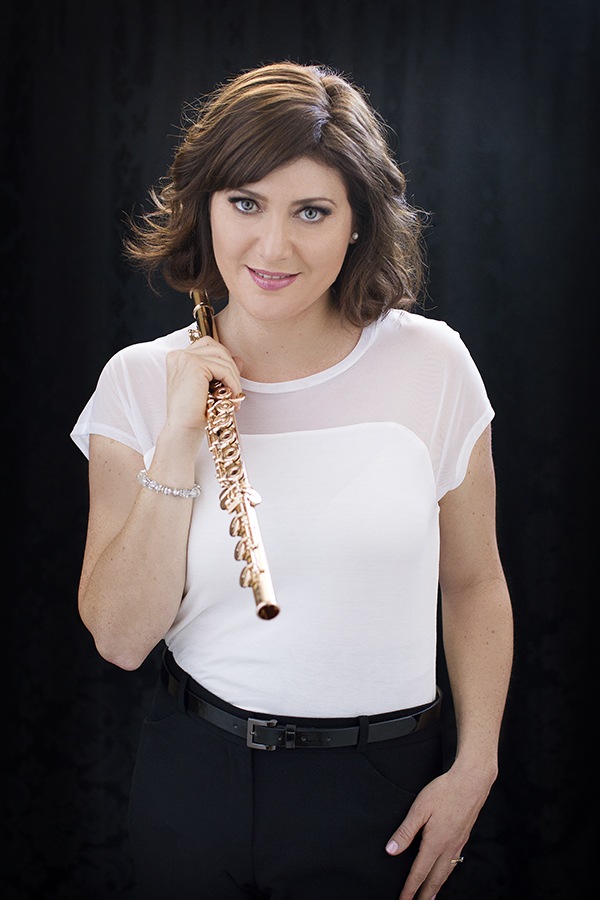
This week is here Bridget Bolliger, an australian-swiss flutist that takes part of one of the best’s chamber music groups in Australia, the New Sydney Wind Quintet, and that also realizes a large activity as soloist, teacher or as Artistic Director of the Sydney Chamber Music Festival. I hope you like this interesting interview!

2013_Bridget-5461-wked

– How did you begin in music? 

     I began learning the piano when I was about 8 years old, but only for one year, and I didn’t learn to read music at that stage. I played by ear and by numbers.  I also played a little bit of recorder at that stage in my life.  My eldest brother was a very talented classical guitar player, a prodigy child, and attended a specialised music high school when he was 12 years old. He began a duo with a talented flute player and I fell in love with the sound of the flute and the way they made music together. Then, I hounded my parents for two years before they bought me a flute and I began learning the instrument at 11 years old. I practised very much for one year and then I entered at the age of 12 the music high school where my brother had attended, and I had already a lot of experience already in my early youth playing solo, chamber music and orchestral repertoire. After high school I left Australia to study in Switzerland with Prof. Peter-Lukas Graf at the Basel Music Academy. I won several competitions and then won my first orchestral job in Switzerland at the age of 23.


– What’s the most curious thing that has happened to you in your career as musician?

2014-04_London-10155422     Perhaps meeting Placido Domingo back stage before he was to perform in an opera in Washington. He was so nervous that he held my hand, and was actually white as a ghost and trembling. It was a surprise for me to discover that even super stars get that nervous before a performance. I was fascinated by the voice and was always listening to singers.

 

– How do you see the current musical outlook?

     Becoming a professional musician nowadays is very different to how it was 20 years ago. It is not so clear cut. The computer age has changed everything. Finding an orchestral job or teaching position is harder than ever before, and musicians need to be versatile and know how to promote themselves in this age of technology.  I have the feeling that being a successful musician has, unfortunately,  become more about being good at running your own business rather than just being an outstanding musician .

gallery_MG_5487


– And finally, some advice for our readers.

     To be a classical musician is “a calling”. I don’t believe that becoming a professional classical musician is something which true musicians simply choose to become. Music chooses us. It is all encompassing and more than just a passion. It is” a calling”, and being clever, lucky, being in the right place at the right time, can be a great help in a musician’s career. But every true musician is capable of producing great work anywhere.

Interview to Emily Beynon

0

hires_1

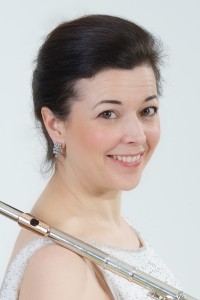
     And again I bring you a new interview to my blog. This time is a very special interview, to one of the actual greatest flutists: Emily Beynon, principal flute of the prestigious Royal Concertgebouw Orchestra of Amsterdam, one of the best orchestras in the world. It’s a pleasure to can read Emily´s words and learn about her great experience. Without a doubt, a great musician is not only a great performer, and she shows it in the following interview. I hope you like it!


– How did you begin in music?

     My parents are music lovers (in fact, they met as children in a local youth orchestra!). My mother still plays piano a little, and they listen to lots of classical music on the radio. I started by learning the recorder at school (aged 9). Then, a year or so later, found my father’s old flute (he’d last played it in his university orchestra), and was hooked!!


– What’s the most curious thing that has happened to you in your career as musician?

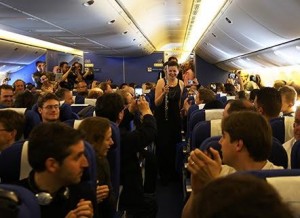
     During the Royal Concertgebouw Orchestra world tour in 2013, we flew to Sao Paulo for one part of the tour. Some of us played a short concert during the flight to celebrate our partnership with KLM – it was my first (and hopefully last!!) concert at 10,000 m!!

unnamed     Emily Beynon


– How do you see the current musical outlook?

     Well, it is of course a time of huge flux; subsidies are being reduced or removed all over the place, and there is a massive shift in the classical music scene. I am absolutely convinced that Man’s need for music will never die, BUT I do think we are going to see lots of changes during the next couple of decades in the way in which (classical) music is presented; venues, times, more innovation, creativity, diversity, more interaction with the public, dance, lighting, video.… it could all be very exciting!

EmilyBeynonfoto-ROLAND-KRÄMER     My greatest hope is that through these changes we don’t lose sight of quality. Though, to be honest, my fear is that with less and less basic music education being offered (in schools), fewer people in the future will be able to appreciate quality, and we may well be left with a “common denominator” effect. I try to keep positive and I think we should ALL work on making those around us, in local schools for example, enthusiastic about classical music! Not necessarily to produce more musicians, but it has been proved in numerous studies that learning a musical instrument can enrich a child’s life and enhance their development!!
 

– And finally, some advice for our readers.

     Keep your eyes and ears open and be interested in your (musical) world. Get out, go to concerts. Hear musicians playing live – CDs and internet are really great resources, but they in no way replace concerts!!


Interview to Diego Aceña

1

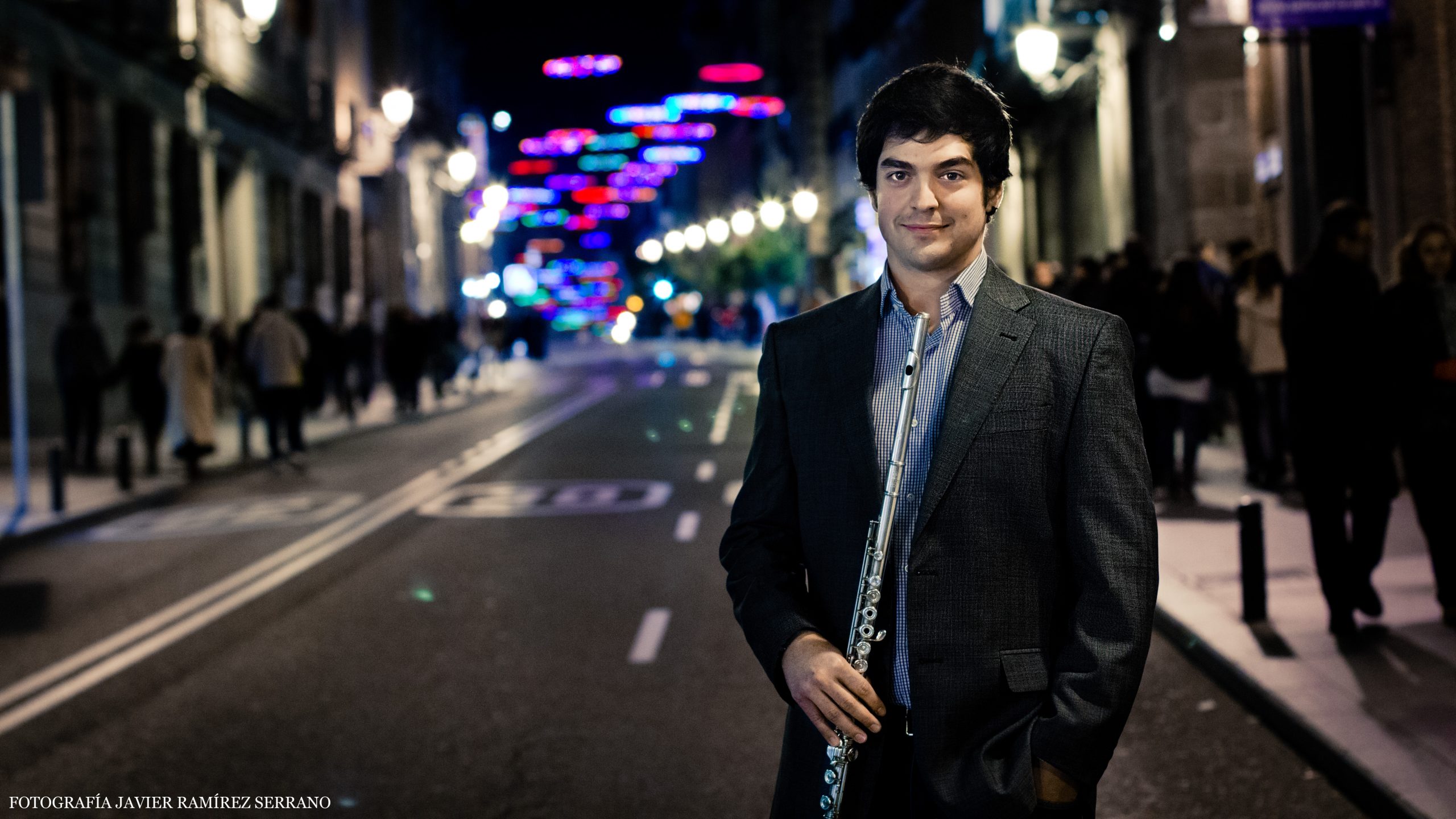
     This week I have the pleasure to introduce a friend who does´t stop growing in his musical career. Diego Aceña has been in such emblematic places as the Royal College of London, the London Philharmonic Orchestra Academy or the Wigmore Hall. He was academist in the well-known Staatskapelle Dresden and currently is solo flute of the Staatstheater Kassel. This boy has promise!! I hope you enjoy the interview!!


  • How did you begin in music?

     There was always all kind of music at home. I especially remember singing with my father playing the guitar. Just when I was born, my father (who is an amateur musician) was studying flute, and as he says, I always wanted to try and didn´t let him study.

     So when  I entered in the conservatory with 7 years old, I was able to make sound the head of the flute. I always liked and was moved by music, but it was a bit difficult for me to understand the discipline and the solitude that the study of your instrument suppose. So when I really got hooked on the flute was when I started playing with people, in chamber music, orchestra or band, I think is then when I found sense in what I did, and since then I have never stopped enjoying with what I do.

     But without the unconditional support of my parents and the help of all my teachers (from Basic and Medium Studies in Madrid, Bachelor in Zaragoza and Master in London), I wouldn´t be able to overcome every little step in my  career, nor be what I am now.


  • What’s the most curious thing that has happened to you in your career as musician?

     A lot of funny and curious anecdotes have happened to me in my career. I remember when I made the auditions. My english was not so good and I needed a translation to know that I had  got in. The same happened, but with the german language, in Staatskapelle Dresden when I got in as academist.

     In my years in London, I have to do all kind of things to earn some money during my studies. Once I went to a high school to do a workshop of composition with other students of the Royal College and, at first, to play the pieces of music that the students had composed. But when I arrived there I was alone and I had to teach a class about composition to students of high school, and then to check one by one their pieces of music. I haver never improvised so good in my life!


  • How do you see the current musical outlook?

     I have been quite a lot time out of Spain and, although I would love it, I see very complicated to return. So I will say what I see from outside. Very few vacancies are announced and there is no economic and cultural  support which supports the  music in our country. It is a shame that a lot of musicians of my generation have had to leave without a return date, although we have lived musical experiences, prepared ourselves, and known things which would be much more difficult in our country,

     We have musicians with a lot of talent in Spain. You should only see youth orchestras such as Gustav Mahler or Schleswig Holstein, in which I have been part of, and in which the percentage of spanish musicians is usually the predominant one,

     I have lived in countries such as England and Germany (where I live currently), and they are countries where  music works in different ways. In England the funding is more private and in Germany everything is from the state. But  in both there are a lot of opportunities and many concerts. In England the more usual thing is being freelance (playing in professional orchestras, amateurs, chamber music or teaching), what allows you to live by music bu not always with the best conditions. In Germany the work conditions are much better and there are a lot of orchestras, and therefore offered vacancies, but also the level and competition are really high in the auditions.

     The main difference between these two countries and Spain is that as much music as art in general are much more appreciated and supported than in our country. The musical tradition in Germany is much more rooted, and orchestras like te Staatkapelle Dresden are working since 1548! The public is also more musically educated in general and the price of the tickets is much more affordable (even sometimes is free for students), what makes easier that people are interested in music and fill the concert halls. Going to listen a concert from a symphonic orchestra can be part of the plan for the weekend and not only to be seen as something exclusive and exceptional. I hope this changes little by little in Spain.

[Tweet “#Interview to Diego Aceña on @JuanValFlauta ‘s blog.”]

  • And finally, some advice for our readers.

      I am nobody to give advices, I can only say what I use for myself. Especially to have excitement for what they do, to have always goals and dreams, and to fight for them. To be brave.

     To be tenacious and not to get discouraged. The musical career is not always a bed of roses and a lot of times you find mishaps or problems, but you have to try to learn of everything and to become strong with all the experiences. At the end you always see the results with work and effort ¡you have only to have patience!

     To be modest and be always ready to learn, to have the ears well opened to listen to the teachers, friends, other musicians… but especiallyto listen to yourself and to know how we want to sound and what we want to transmit and do musically. We have to forge our own musical opinion, because we can be our best teacher!


Guardar

Guardar

Guardar

Interview to Paolo Taballione

7

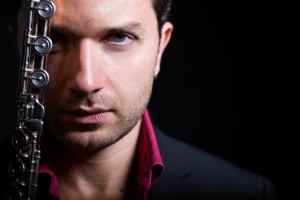
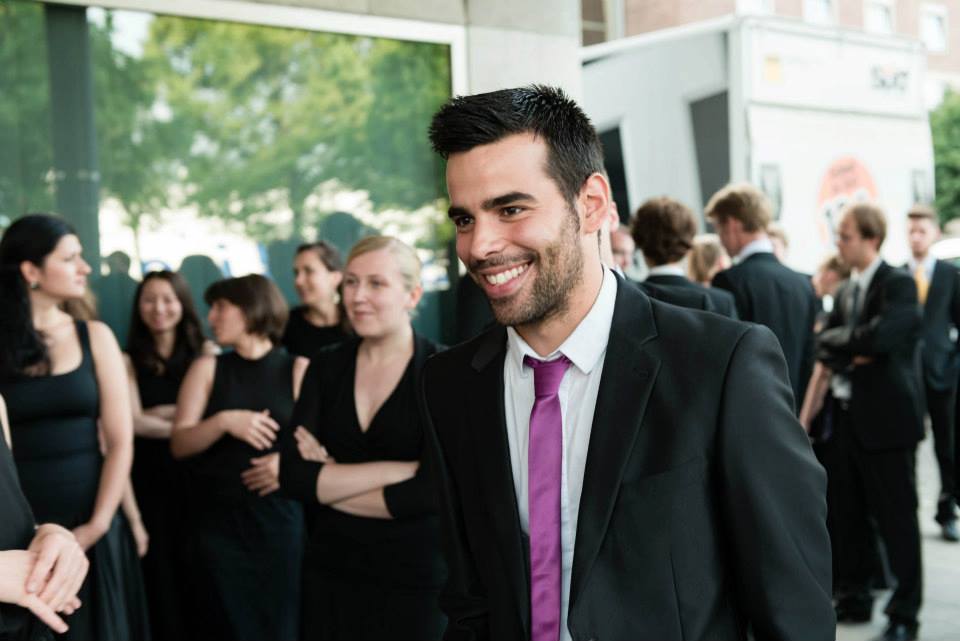
     This week I have the big pleasure to introduce one of the most renowned soloists in Europe. I knew him in Musica Riva Festival in Italy last summer, where he played an amazing Mercadante Concerto with Orquesta Reino de Aragón. Great person, incredible flute player and musician. Paolo Taballione is the principal flute in Bayerische Staatsorchester in Munich. I hope you enjoy the interview as much as me!


Paolo Taballione 3


  • How did you begin in music?

     When I was child, there was always music around me at home. Any of the members of my family was a professional musician. They were just amateurs, but moved by a great passion for the music… So for me it was really natural try to play the piano with my brother, the guitar like my father or singing with my mother.

     When I was 8 years old, I started with the violin but I found it really boring, so I changed to the flute. My first flute teacher was just amazing, a great person with a big sensibility. He showed me how the music can be fantastic and entertaining also on the flute, and since that I started to play and to give my best all the days!


  • What’s the most curious thing that has happened to you in your career as musician?

Paolo Taballione + ORA     Long time ago (I was 23) I was the Principal Flute of the Cherubini Youth Orchestra, founded and directed by Riccardo Muti and formed by all the best italian young musician..just an amazing orchestra! In the last tourné of the season, the “encore” was a very beautiful piece of G. Verdi, with a solo and cadenza for flute. During the last concert, I don´t know why, maybe to do something different, I started to improvise my cadenza!

     The face of Muti became really white (I guess for the shock) for the first 10 seconds. Then more and more red (he was really angry!). Only in this moment I realised that I was joking in front of one of the most important and most serious conductors of our time. He conducted the rest of the piece with his red eyes fixed on me and the atmposphere in the orchestra became really oppressive!! After the concert I spoke with Muti, and fortunately he forgave me. But anyway I never made something like this more!!


  • How do you see the current musical outlook?

Paolo Taballione     The possibility for a young musician to work with in chamber music, making recitals or solo-concerts, and to survive with these activities, is not very much at the moment.
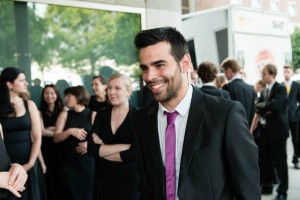
     About the orchestral situation, in each country is different. In Italy for example is very difficult now for a student to find a job. The orchestras have financial problems and there are not a lot of auditions. In France and in Spain, I guess is a little bit like in Italy, with a lot of good students and not so many possibilities. Sometimes there are 300 candidates for 1 place! In Germany and Austria perhaps is better. There are more orchestras without financial problems and consequently a little bit more possibilities to get a job. Of course, for this reason the level of the auditions is extremely high!


  • And finally, some advice for our readers.

     The flute can sometimes result very difficult, but the music is a marvelous and infinite thing, so it’s really important to open our mind, to be extremely well preparated, strong and to give always our best! This is the only way I know!


Interview to Francisco López

1

     I remember when I started my studies in the High School of Music. Everything was really new and amazing, you are in a “freakflutic” atmosphere. Right, there were several people with whom I was amazed and who you have always as a reference.

     Some weeks ago we read the interview to Ana Naranjo and this week Franciso López (flutist in  Gothenburg Opera, in Sweden) tells us his musical experiences. I hope you enjoy it!


Francisco Lopez - Flute


  • How did you begin in music?

   I remember how I got in the conservatory of Plasencia, my home city. The teacher of music in the school gave me a note to hand over to my mother, in which she said she wanted to see her personally. When I read the note I tried to hide it because I tought that probably I would have done something wrong. I was never known for being a good boy in the school. Finally the note arrived to my mother´s hands and they decided to take to me to do the auditions for the conservatory. My mother told me that the teacher of music was always finding me during the breaks sneaking in the music room and playing all the instruments there were.

     You can imagine the rest: I did the audition and I was lucky to be able to choose the instrument I wanted. The one I liked the most was the flute, and I am sure that it was due to the way in which Juanjo Hernández did the demonstration. He was my teacher and the one who did that I really loved the flute.


  • What’s the most curious thing that has happened to you in your career as musician?

A lot of things more or less curious have happened to me, it´s difficult to remember only one.

1010378_498993116835592_1811936147_n    When I was playing in the Plasencia Band there was a time in which we had no tuba and I offered myself voluntarily for some months, but I realized soon that tuba was not for me.

       There were also a couple of years in which I played in open-air dances in summer with my sister. She sang and I played the keyboard and sometimes the flute. One night, while I was playing the keyboard, one dude climbed the stage and grabbed my flute in order to steal it. I had time to react and nothing happened. But I took not a long time to give up the world of the open-air dances.

     During the years in the High School of Music in Zaragoza, I played jotas on a very professional level with the group “Nobleza Baturra” and also something of flamenco with the group “La Querencia”. Both were very enriching experiences.


  • How do you see the current musical outlook?

     If you mean the musical outlook here in Sweden, I see it marvellously. I think that the swedish society has known how to find a good balance between musical tradition and to adapt to the demands of the current society. The orchestras don´t mind playing in concerts with pop singers, or even playing musicals and taking part in concerts and workshops with children. A month ago we made in Gothenburg Opera a very interesting proyect in which we played the soundtrack of “ Frozen Planet”, a documentary about the wild life in the poles by BBC, and we had a screen behind with the video. It was a big success, so we will repeat it in February. This kind of proyects, without forgetting of course the occidental music tradition, make you find a balance between present and tradition. Of course there are ochestras, such as Gothenburg Symphony, that have a great tradition (more than a century) and they have played with conductors such as Grieg, Sibelius or Nielsen, who take part of the history of occidental music. This kind of orchestra is devoted more profoundly to the traditional clasical repertoire.

297469_366269656774606_334764731_n      Something to keep in mind in Sweden is also that the price of the tickets for this kind of shows is quite affordable for any pocket, due to the fact that most of the price is financed by the swedish government. To see the symphonic orchestra, the student ticket is about two euros, and the normal ticket between ten and thirty. To see an opera costs six euros if you are a student, and the normal ticket can cost from fifteen to fifty euros.

    This fact is quite important if you compare it with the reality in concert halls and theatres in Spain, where the average citizen doesn´t get the chance to see the majority of the concerts and operas.

     Generally, I think that the spanish tradition of orchestras and operas is quite young and this makes music doesn´t arrive everywhere. There are a lot of people who don´t recognize the instruments of the orchestra yet, and even go to the concerts with total ignorance about what they are going to listen. The musical theatre really helps to touch all the publics and to awaken their interest. It´s easier to reach people telling a good story. Germany is a clear example of what I am talking about. The number of operas is considerably higher than the number of symphonic orchestras. There are very small villages that have a theatre in which they play operas every week.

     Clasical music hasn´t left a mark on our society yet, and it´s our duty to teach to listen as much children as adults.


  • And finally, some advice for our readers.

388110_364313190303586_1797065064_n     I find always hard to give advice….I think that the most important thing in our profession is to learn how to listen to yourself.  During our  years of degree we listen to our teachers,  to professionals, to conductors and even to our classmates saying what is right and what isn´t. It´s posible to learn from everything, but much more important is the time we spend developing our creativity. To trust in our imagination can be sometimes something risky, but music is a way of expression. To find our own expression needs more effort, but I think when you find it you learn to live in a more honest way.